


Have you ever asked yourself why there are certain nights when you are more tired and other times your body gets into patterns that are the same during the month? The answer may be floating right above you. For thousands of years, humans have seen relationships between the moon and earthly life revolving around them. The way the moon affects humans is numerous (from ancient farmers’ notes on what to plant when, to current science researchers now studying sleep patterns) and never fails to intrigue us.
The moon phases in and out of eight different stages over the course of 29.5 days, establishing an otherworldly rhythm that impacts the likes of ocean tides and even human actions. Scientifically proven or not, millions of people around the world base parts of their lives on lunar effects. Even if you are not convinced, the evidence shows that our nearest celestial neighbor very likely has a much greater influence on earthly life in general than we think.
The Science Behind Lunar Cycles
The moon is powerful enough to displace entire oceans, creating tides that are visible on beaches around the world. The human body is 60% water, so it stands to reason that the moon might have an impact on us as well. In recent years, however, scientists have found evidence that the moon may exert other influences on life here on Earth — beyond just moving our water around.
Gravitational Forces at Work
Ocean tides are only some of many bodies that move in response to the Moon’s gravity. Research shows that:
- Atmospheric tides: The moon gently tugs on our atmosphere to produce delicate contrasts in pressure
- Groundwater movement: Longer-term water level changes follow lunar cycles
- Circadian rhythms: Although circadian rhythms predominate over lunar effects, there are a number of species in which lunar patterns are manifest in reproduction and growth
Light and Darkness Patterns
The amount of moonlight varies wildly during the lunar cycle, as the moon goes from new to full. The full moon can be 14 times brighter than a new moon and has effects on:
- Natural sleep-wake cycles
- Animal and human hormone production
- Plant growth and flowering times
- Animal hunting and feeding behaviors
Eight Moon Phases And Their Daily Reflections
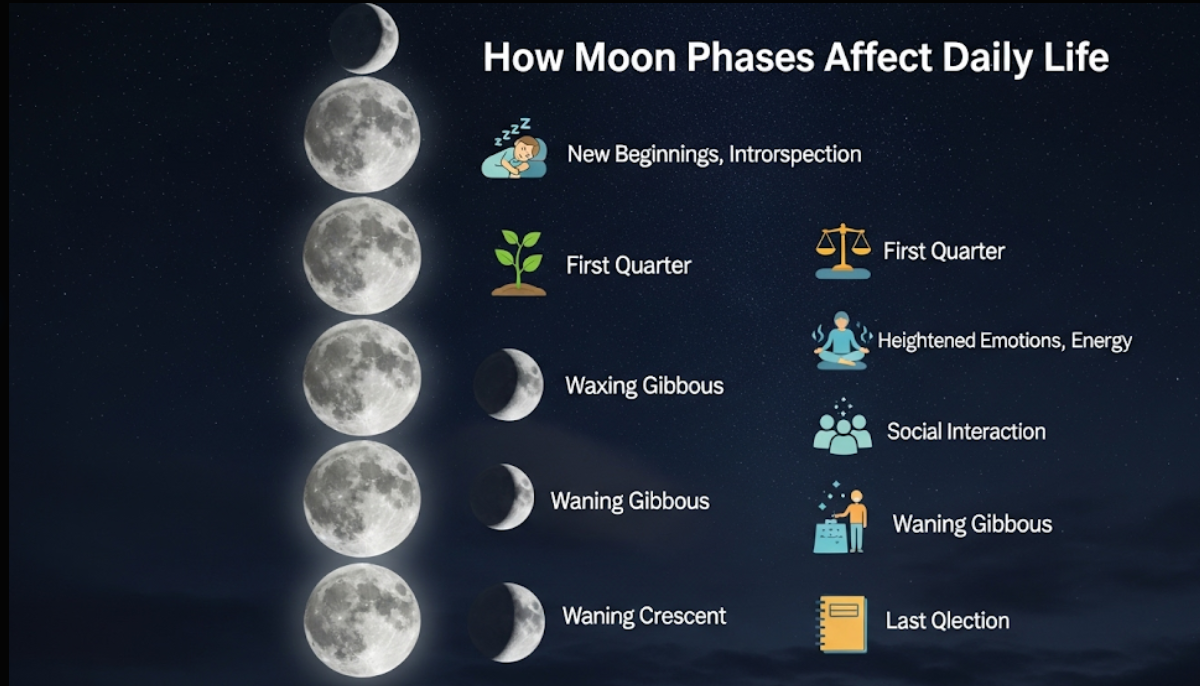
Every moon phase has a different energy and might manifest differently in your daily life. Here is what occurs in each phase:
New Moon: A Fresh Start, New Energy
The New Moon is the start of a new lunar cycle, in which there is no light shining upon the moon. This phase typically brings:
Physical Effects:
- Decreased energy in the evening
- Deeper sleep for many people
- Reduced appetite in some individuals
- Better focus and concentration
Emotional and Mental Impact:
- Desire to start new projects
- Increased introspection
- Better decision-making abilities
- Reduced social energy
Waxing Crescent: Building Momentum
Energy then builds up as the moon shows a thin sliver of light. People often experience:
- Gradually improving sleep quality
- Increasing motivation levels
- Better planning abilities
- Growing optimism about future goals
First Quarter: Action and Challenges
Half-moon gives hope and courage to many. Common experiences:
- Increased physical energy
- Better problem-solving skills
- Higher productivity at work
- More intense dreams
Waxing Gibbous: Refinement and Adjustment
The fuller the moon gets, more people feel the urge to make their plans perfect:
- Enhanced attention to detail
- Improved learning ability
- Stronger communication skills
- Increased social interactions
Full Moon: Power and Passion at Their Height
Effects are strongest and most noticeable at full moon.
Physical Changes:
- Impaired sleep (clinically established)
- Increased hospital emergency visits
- Some locations have higher birth rates
- More vivid and memorable dreams
Behavioral Changes:
- Heightened emotions and sensitivity
- Increased creativity and inspiration
- More social activities and gatherings
- Increased energy, but increased restlessness as well
Waning Gibbous: Gratitude and Sharing
The energy settles after the full moon, which brings:
- Passion for knowledge and experience sharing
- Increased gratitude and appreciation
- Better group cooperation
- Slowly getting back to normal sleep schedule
Last Quarter: Releasing and Letting Go
The third quarter moon is about letting go and forgiveness:
- Decreased stress levels
- Greater capacity to forgive
- Improved emotional balance
- Decreased appetite
- Increased sense of detox (feeling that you need to flush your body of old toxins)
Waning Crescent: Rest and Recovery
The final stage before the new moon arrives:
- Lower energy levels
- Need for more rest and sleep
- Increased introspection
- Preparation for the next cycle
Moon Phases and Sleep Patterns
The scientific effect of the moon phases that has been documented most widely is on human sleep. More than one study has proven that there are links between lunar cycles and your sleep quality.
Scientific Sleep Studies
A study from the University of Basel determined that people undergo these changes:
During Full Moon:
- Sleep 5 minutes later
- Sleep 20 minutes less overall
- Experience 30% less deep sleep
- Have lower melatonin levels
During New Moon:
- Fall asleep faster than average
- Enjoy deeper, more restful sleep
- Wake up feeling more refreshed
- Have more stable sleep cycles
Tips for Better Lunar Sleep
Full Moon Sleep Strategies:
- Use blackout curtains to block the moonlight
- Consider melatonin supplements (check with a professional beforehand)
- Practice relaxation techniques before bed
- Avoid caffeine after 2 PM
New Moon Sleep Optimization:
- Use this time for deeper, natural sleep
- Establish consistent bedtime routines
- Focus on sleep debt recovery
- Practice dream journaling
Emotional and Mental Well-being Throughout Lunar Cycles
Emotionally, phases of the moon affect many people. Most of those effects cannot be separated scientifically, but many cultures have adopted lunar emotional patterns.
Mood Changes by Phase
| Moon Phase | Emotional Type | Mental State | Energy Level |
|---|---|---|---|
| New Moon | Introspective, calm | Clear thinking | Low to moderate |
| Waxing Crescent | Optimistic, motivated | Goal-oriented | Building |
| First Quarter | Determined, challenged | Action-focused | High |
| Waxing Gibbous | Anxious, perfectionist | Detail-oriented | Very high |
| Full Moon | Intense, emotional | Creative but scattered | Peak |
| Waning Gibbous | Grateful | Sharing knowledge | Moderate to high |
| Last Quarter | Forgiving | Balanced, letting go | Moderate |
| Waning Crescent | Peaceful | Restful and reflective | Low |
Managing Lunar Emotions
High Energy Phases (First Quarter to Full Moon):
- Schedule important meetings and presentations
- Tackle challenging projects
- Exercise more intensely
- Be patient with increased sensitivity
Low Energy Phases (Last Quarter to New Moon):
- Focus on rest and recovery
- Practice meditation and self-care
- Prepare yourself for the future
- Do not make any major decisions
Physical Health and Moon Phases
As far as scientific understanding of moon phases and physical health is concerned, very little conclusive research has been done, although some important points can be found from thousands of years of traditional medicine.
Documented Physical Effects
Hospital and Emergency Room Data:
- 23% rise in emergency visits during full moon periods
- More accidents and injuries
- Some argue there are more babies born when the moon is full
- Increased bleeding during surgeries
Sleep and Recovery:
- Wounds healing slower during certain phases
- Changes in blood pressure patterns
- Variations in immune system response
- Different medication absorption rates
Menstrual Cycles and the Moon
Some women say they feel aligned with moon phases and their menstrual cycles:
- Typical 28-day cycle is consistent with 29.5-day lunar month
- Some women experience stronger symptoms during full moon
- The timing of ovulation might be influenced by lunar phases
- Many ancient cultures associated feminine cycles with lunar cycles
Agriculture and Food Production
Millennia-old agricultural practices have relied on lunar phases to govern when seeds are planted and when fruits or grains are harvested. Some of these traditional beliefs are being validated by modern research.
Lunar Gardening Principles
Best Planting Times:
- New Moon: Plant seeds for underground or root crops (carrots, potatoes, onions)
- Waxing Moon: Plant above ground crops (tomatoes, lettuce, beans)
- Full Moon: Pick fruits and vegetables for best taste
- Last Quarter: Cut back plants and work on the soil
Scientific Evidence for Lunar Agriculture
Studies have shown that:
- Different moon phases affect how plants take in water
- Germination rates vary with lunar timing
- Certain crop yields show improvement with moon phase planting
- Certain phases are better suited for soil preparation
Animals and Lunar Behavior
The phases of the moon have a profound influence on wildlife behavior, from hunting success to reproduction cycles.
Marine Life
The lunar cycle is particularly important for many ocean creatures:
- Coral spawning takes place during particular moon phases
- Fish feeding times shift according to lunar luminosity
- Sea turtle nesting follows lunar cycles
- Many species’ reproduction cycles align with lunar phases
Land Animals
Nocturnal Animals:
- More active hunting when the moon is darker
- Time migration based on moonlight
- Adjust communication during full moons
Domestic Animals:
- Dogs and cats may be more active during full moons
- Changes in grazing patterns of farm animals
- Pet behavioral changes during different phases
Business and Economic Patterns
While there are correlations between some businesses and financial markets with moon phases, the causation is not always apparent.
Market Performance
Several patterns have been identified by financial research:
- Stock market volatility sometimes rises with full moons
- Consumer spending habits may differ with lunar cycles
- Agricultural prices adjust according to moon farming practices
- Some investment strategies use lunar timing
Service Industry Effects
Businesses often notice shifts in customer behavior:
Restaurants and Entertainment:
- Increased customer footfall during full moon weekends
- People drink more alcohol on full moon nights
- More bookings around new moon times
Healthcare Services:
- Emergency rooms prepare for busier full moon shifts
- Mental health services experience higher call volumes
- Maternity wards report varying birth patterns
Cultural and Historical Perspectives
Humans have known for thousands of years that the moon has a profound effect on daily life.
Ancient Civilizations
Ancient Egypt:
- Followed moon phases to set their calendar
- Attached moon stages to farming seasons
- Connected lunar time to religious worship
Traditional Chinese Medicine:
- Links organ systems to moon cycles
- Suggests different foods for different phases
- Practices medicine according to lunar timing
Native American Traditions:
- Gave specific names to each full moon according to seasonal activities
- Planned hunting and gathering by lunar phases
- Performed spiritual rituals during specific moons
Modern Cultural Practices
Many modern traditions still revere the phases of the moon:
- Religious festivals follow lunar calendars
- Meditation and yoga practices follow moon phases
- Beauty care routines use lunar timing
- Goal setting and manifestation practices harness lunar energy
Practical Ways to Align with Moon Phases
Whether you’re a believer or simply curious, here are some practical ways that you can align your daily life with moon phases:
Daily Planning
High Energy Phases (New Moon to Full Moon):
- Schedule important meetings and presentations
- Start new exercise routines
- Tackle challenging home projects
- Plan social gatherings and events
Low Energy Phases (Waning Moon to New Moon):
- Focus on planning and organizing
- Practice self-care and relaxation
- Clear clutter from your space
- Reflect on goals and priorities
Health and Wellness
Nutrition by Moon Phase:
- New Moon: Light, cleansing foods
- Waxing Moon: Nutrient-dense, building foods
- Full Moon: Hydrating foods and lots of water
- Waning Moon: Detoxifying foods, herbal teas
Exercise Recommendations:
- New Moon: Light yoga, walking, stretching
- Waxing Moon: Building exercises, compound movements
- Full Moon: High intensity, team sports
- Last Quarter: Recovery, massage, rest
Work and Productivity
Project Timing:
- New Moon: Perfect time to begin new projects and initiatives
- Waxing Moon: Build momentum and gather resources
- Full Moon: Finish up projects and present them
- Waning Moon: Review, edit, organize dealings
Common Myths and Misconceptions
Although there are some factual lunar effects, some general beliefs about moon effects lack scientific support.
Debunked Myths
Hospital Births:
- Although some research suggests increased births during full moons, other studies find no correlation
- Hospital staffing expectations can create confirmation bias
- The overall evidence is weak and inconclusive
Crime Rates:
- Contrary to popular belief, crime does not rise during full moons
- Police departments anticipating increased crime can account for over-reporting
- Media hype creates false beliefs about full moon crimes
Mental Health Episodes:
- The word “lunacy” is rooted in lunar beliefs but recent research shows otherwise
- A few studies report marginal increases in certain behaviors, but effects are tiny
- Individual personality differences trump moon phase effects
Evidence-Based Effects
Focus on lunar effects that currently receive scientific support:
- Sleep pattern changes (well-documented)
- Tidal effects (confirmed)
- Some animal behavior changes (observed)
- Traditional agricultural timing (some evidence)
Creating Your Personal Lunar Calendar
Getting started with moon phase tracking in your life:
Month 1: Observation
Keep a basic daily journal noting:
- Sleep quality and duration
- Energy levels throughout the day
- Mood and emotional state
- Notable events or experiences
Month 2: Pattern Recognition
- Review your first month’s notes
- Search for patterns that follow moon phases
- Circle which phases feel more energizing
- Identify challenging lunar periods
Month 3: Intentional Living
- Start scheduling activities according to your identified patterns
- Place social activities in your high-energy phases
- Rest and reflect during low-energy phases
- Adjust sleep schedule according to lunar timing
Conclusion
The moon has more of an impact on everyday life than just serving as fuel for ancient folklore and superstition. From documented biological responses when our sleep patterns are altered to observations of animals with modified behavior, our closest celestial neighbor continues to influence life on Earth in subtle yet profound ways.
While not every claimed lunar effect has scientific proof, the evidence is compelling enough for you to experiment with living according to moon phases if you wish. Whether you sleep better during new moons, feel more creative during full moons, or find recurring feelings and emotions that correlate with the lunar cycle, these are all expressions of natural rhythms that may have an impact on your daily life.
Living with lunar awareness involves a balance of open-mindedness and skepticism. Take note of your own patterns, see what works for you as an individual, and use moon phases for self-reflection rather than something that should control your life. The moon has been with humanity for thousands of years — and perhaps awareness of its phases is synonymous with reclaiming your own natural rhythms.
Begin small with just being aware of the phases of the moon on a daily basis. You might find, in time, that an appreciation for how this ancient timekeeper can inform healthy habits in your modern life becomes the key to better rest, more productive days, and a stronger connection to the nature around you.


