

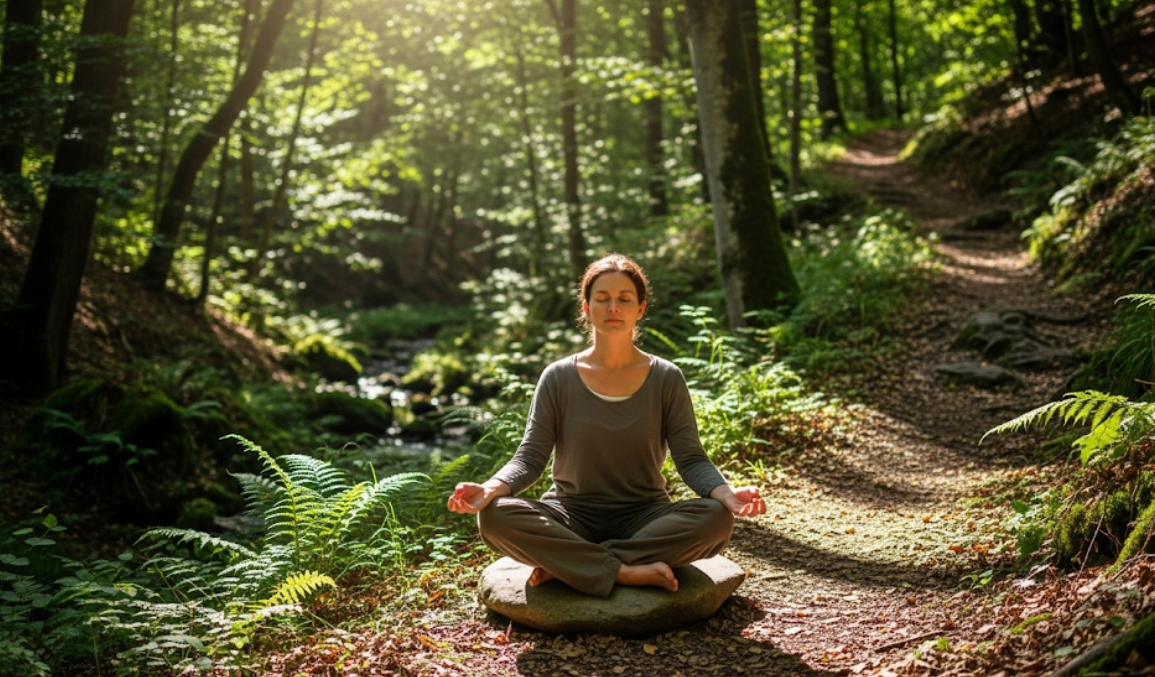

Could you picture walking out your front door and feeling your stress disappear immediately? Imagine the fresh air filling your lungs with clarity in your mind. This is more than a fantasy — this is the result of bringing together an ancient meditation practice and walking in nature.
Nature walk meditation, or walking meditation and mindful hiking as it is also known, quite simply merges two great healers: calming down in the outdoors and gaining peace from practices involved with becoming more aware of our thoughts. You are able to move your body while keeping your brain in practice of remaining present and alert rather than remaining still in a quiet room.
It has boomed in popularity, as more and more people try to find ways to combat their anxiety, improve focus, and ground themselves back in nature. While on the more contained end, research shows that time spent in nature can lead to a 20% decrease in stress hormones and meditation has been shown to rewire the brain for improved emotional regulation and mental clarity.
If you are new to meditation or have been practicing for years, both can benefit from using nature walk meditation as a means to mix it up and make your meditation more of an adventure than a routine. Now that you have learned the basics, let’s step through how you can turn these regular walks into potent mindfulness sessions to improve your physical and mental health.
Why Is Nature Walk Meditation So Amazing?
Nature walk is not just walking barefoot on soil and taking some deep breaths. There are only a few ways that one can integrate mindful movement with nature to create this brand of mental training.
In classical meditation, one would often sit in one position and center themselves, either inhaling through the nose slowly and exhaling through the mouth even slower or (as Buddhists practicing mindfulness do) focusing on a mantra. Walking meditation reverses this usage, where one enters first by engaging the rhythm of steps and experience of movement as primary. Factor in the sights, sounds, and smells of nature and you have a multi-sensory experience which engages your entire being.
The Science Behind the Magic
When outside, your brain sees things differently than when inside. Natural environments have also been found by science to trigger the parasympathetic nervous system that is responsible for your “rest and digest” response, making you feel at ease and more relaxed.
In addition, the rhythmic nature of walking falls into alignment with your respiration and heart rate. This causes what researchers refer to as “bilateral stimulation,” which can help integrate the left and right sides of your brain and might also assist in processing difficult emotions.
When It Works Better Than Indoor Meditation
Traditionally practiced sitting meditation proves difficult for many to adhere to because:
- Their minds are too harried to be still
- Indoor noises and things bother them
- They feel disconnected from their own bodies
- Indoor spaces remind them of obligations and stress
But nature walk meditations help you:
- Give your body something to do while your mind houses itself
- Deliver natural sounds that help you concentrate
- Gently allow you to experience physical sensations
- Get you outside of your normal stressors and into a calm environment
Amazing Benefits You’ll Experience
Nature walk meditation offers benefits you may simply not expect when venturing into the outdoors. Studies from universities all over the world indicate this — and suggest that it changes your mental and physical health in dramatic ways.
Mental Health Improvements
Stress Reduction That Sticks: Just like when you slap a bandaid on a gaping wound, most things that supposedly alleviate stress manage to take the edge off temporarily but very few have permanent effects in how your brain deals with it. Regular practice decreases cortisol (stress hormone) levels during both rest times, not just while walking.
Increased Focus and Concentration: The gentle motion coupled with the all-outdoors nature restores what scientists call directed attention. It is your power of concentration – the very thing that modern life sucks dry with its incessant claims on your attention.
Promotes Mood Improvement: Nature walk meditation aids in the release of serotonin and dopamine (our “happy” hormones), making us happier and more motivated. Most practitioners show noticeable improvements in their feelings of well-being within the first few weeks.
Grounding: The groundedness of your feet on the earth plus the expansiveness of your field when you are outdoors combines to create a calming effect that will still and quiet down any high stress thoughts.
Physical Health Benefits
| Beneficial Impact | Timeline to Notice Results |
|---|---|
| Denser bone mass: Weight-bearing exercise encourages bone growth | 6-7 weeks |
| Lower blood pressure: Relaxation response lessens cardiovascular stress | 2-4 weeks |
| Better sleep quality: Natural light exposure regulates circadian rhythm | ~1 week |
| Stronger immune system: Reduced stress hormones enhance immune function | 4-6 weeks |
| Heart-healthier: Physical activity strengthens heart and lungs | 3-4 weeks |
| Better balance: Uneven terrain challenges stabilizing muscles | 2-3 weeks |
Spiritual and Emotional Growth
Some people find that being on a nature walk will open them to more profound levels of self-knowledge and spiritual connection. We allow ourselves the quiet of nature so we can by default and in our own time:
- Connect better with what surrounds you
- Be clear on what you value and where your personal priorities lie
- Feel a sense of wonder that boosts the quality of life
- Enhance your compassion toward yourself and others
- Find inner peace that does not come from external circumstances
The Nature Walk Meditation 101
A nature walk meditation practice is something you can start right now and doesn’t require any special equipment, fancy classes or perfect weather. The only thing you need is the openness to experience the world around you.
Choosing the Perfect Location
The practice location should be a place relatively calm and stable, where you can walk safely without any major disruptions for 10-30 minutes. Here are some great options:
Beginner-Friendly Locations:
- Paved walking paths in local parks
- Quiet residential neighborhoods with sidewalks
- School tracks or recreational facilities
- Flat sandy beaches or flat edges of lakes
Advanced Locations for More Experience:
- Nature trails and hiking paths
- Forest preserves and wilderness areas
- Mountain trails with moderate elevation
- Botanical gardens and arboretums
Essential Preparation Steps
What to Wear:
- Comfortable walking shoes you can stand in all day
- Weather-appropriate clothing in layers
- A sunhat and sunscreen to stay safe from the sun
- Bright colors for walking near traffic
What to Bring:
- A small water bottle
- Your phone in case of emergencies (to be set to silent)
- A towel
- Optional: a small journal to reflect on after the walk
Safety First:
- Let someone know where you’re headed and when they should expect your return
- Check the weather before you go
- Don’t walk alone in deserted spots
- Know local wildlife and plants to avoid
Setting Your Intention
Before you walk, pause to set an intention for your practice. This isn’t something you need to accomplish; it is instead a soft point toward your focus. Some examples:
- “I want to see the beauty in nature”
- “I need to feel my body more connected”
- “I’m here to leave worries of today behind”
- “I want to work on being present”
Step-by-Step Practice Guide
So let us assume that you are prepared and have selected your site; it is time to get started with the process itself. Just as a reminder, there is no such thing as “the right way” to do this – the goal is kindness toward yourself and willingness to explore your own experience.
Stage 1: Grounding & Arrival (3-5 mins)
Standing still to start your walk helps with consciousness. Where you are likely coming from a busy day, so this will help you transition into more of a mindful state.
Step 1: Breathe Three Times Deeply
- Breathe slowly in through your nose for 4 counts
- Hold gently for 2 counts
- Breathe out through your mouth for 6 counts
- Allow your breath to return to its normal pace
Step 2: Body Awareness Check
- Feel the ground under your feet
- Notice the weight of your body, how it leans and flows
- Notice any tightness in your shoulders, jaw, or hands
- Let go of tension
Step 3: Sensory Opening
- Survey around and identify three things you are seeing
- Identify 3 sounds around your surroundings
- Breathe in, and notice any smells around you
- Notice the temperature of the air
Stage 2: Mindful Walking (15-25 minutes)
And now you can really start to walk. Focus not on realizing you are at the destination, but on each step of the way.
Starting to Walk:
- Start by walking significantly slower than usual
- Feel the lift of your foot off the ground
- Feel your leg going forward
- Focus on how your foot strikes the ground
- The more you feel the weight change from one leg to another, the better
Breathing While Walking:
- Don’t try to change your breathing; allow it to flow naturally
- Feel the breath change with your walking speed
- If you are out of breath, slow down your pace
- Use your breath as an anchor when your mind wanders
Working with the Mind: Your mind will often wander when doing this practice – that is completely normal, and not a reflection of poor skill. When your mind wanders to your to-do list, work, or family problems:
- Gently appreciate the thoughts without judgment
- Acknowledge your mind for wanting to help you resolve things
- Bring the thinking mind back to your feet walking
- If this happens 50 times, don’t get angry
Stage 3: Extended Awareness (10-15 minutes)
With the rhythm established in your walking and breathing, you can start to expand your awareness to the rest of your environment.
Nature Connection Techniques:
The 5-4-3-2-1 Method:
- Observe 5 things you can see (clouds, leaves, rocks)
- 4 things you can touch (tree bark, fence, your clothes)
- 3 things you can hear (birds, wind, footsteps)
- 2 things you can smell (flowers, soil, fresh air)
- 1 thing you can taste (the air)
Color Meditation: Select one color and notice all the shades of it. This meditation will bring attention to the present moment and is a great way to enhance concentration.
Texture Hunt: Pay attention to the feel of things you touch – smooth rocks, rough bark on trees, cool soft grass under your feet, sharp pine needles. You can even stop to touch various natural surfaces if it is safe and appropriate.
Stage 4: Integration and Closing (5 min)
As you finish your walk, when you are closer to home or back to the starting point, create space for that transition to help yourself carry the experience into daily activity.
Gratitude Practice:
- Name three things you saw on your walk that you are thankful for
- That could be a beautiful sight, a peaceful moment, or just giving yourself the time
- Allow this sense of gratitude to sink into your being
Intention for the Day:
- Revisit your intention in your mind; carry this peaceful feeling with you
- Set an intention to approach the rest of your day with calm energy
- Remember you can always come back to this walk as a memory any time you need grounding or solace
Advanced Techniques for Deeper Practice
If you have been doing nature walk meditation for a while, here are advanced techniques that can take your experience to deeper and richer places.
Seasonal Awareness Meditation
There are chances for mindfulness practice during every season. Tune in to what the seasons have to share with you, connect yourself more deeply to these natural cycles and find renewed inspiration for your meditation practice.
Spring Focus Areas:
- New growth and life emerging
- Different light patterns
- Listen for returning bird songs
- Breathe in the warming spring air and flowering scents
Summer Techniques:
- Feel sunlight on your skin
- Observe all the lushness that surrounds you
- Hear the sounds of insects and other animals busy with their work
- Be grateful for nature’s abundance of life
Fall Practices:
- Watch as colors change and leaves drop
- Notice the sharpness of the air
- Reflect on themes of letting go and transition
- Smell the earth getting ready to rest
Winter Approaches:
- Savor the beauty in bare trees
- Notice how sound carries in cold air
- Embrace winter’s stillness and calm
- Appreciate life resting, even when it appears dormant
Walking Meditation with Mantras
Repeat a meaningful phrase with your steps to support deeper concentration and provide more focus for your meditative practice.
How to Practice:
- Choose words that resonate with you — keep it simple
- Step with the rhythm of your words
- Allow the mantra to anchor your focus
- If you find yourself getting lost in thought, return to the phrase
Effective Mantras for Nature Walking:
- “Step into peace” (4 steps)
- “Here and now” (2 steps each)
- “I am well, I am good” (4 steps)
- For slower walking: “Breathing in peace, breathing out stress”
Silent Walking Retreats
Extend your practice beyond thirty minutes twice or three times a month, and walk the whole time in silence. This practice might last anywhere from 45 minutes to two hours and could offer greater stress-relief potential and deeper insight.
Preparation for Extended Practice:
- Choose a safe route with lots of variety in terrain
- Take water and notify someone of your plans
- Start with 30-45 minutes and work your way up
- Choose times you will not be disturbed
Structure for Extended Sessions:
- First 10-15 minutes: Slow settling, embodying where you are
- Middle section: Cycle through your techniques
- Last 15 minutes: Slowly returning to normal awareness
- After the walk: Journal for 5-10 minutes about the experience
Creating the Perfect Environment
Your environment determines how great a nature walk meditation you may have. You do not need perfect conditions to practice, but some basic environmental considerations can make your sessions much more effective and pleasant.
Weather Considerations
Rainy Day Meditation: If you are able to meditate in light rain, congratulate yourself as the sound of rainfall can be calming and fresh air is invigorating. You can walk safely on wet pavement with the proper gear in place.
- Wear waterproof clothing and footwear
- Use an umbrella if necessary for safety
- Listen to the rain, smell the fresh air
- Notice how the wet environment alters the landscape
- Use caution on wet surfaces
Hot Weather Strategies:
- Practice in cooler parts of the day (morning or late evening)
- Choose shaded routes when possible
- Wear light-colored, breathable clothing
- Stay hydrated: drink water before, during and after
- Listen to your body and rest when necessary
Cold Weather Adaptations:
- Wear layers that are easy to remove as you warm up
- Wear gloves and warm socks to protect extremities
- Give your body more time to adjust to movement
- Imagine the cold air as fresh and cleansing
- Experience the unique beauty of winter landscapes
Timing Your Practice
Morning Sessions (6-9 AM):
- Pros: Quiet, fresh air, natural light boost for your mood
- Cons: Could be rushed if you have work/school commitments
- Ideal for: People who are naturally morning people and want to start their day with purpose
Afternoon Sessions (12-3 PM):
- Pros: Study break, sunshine (vitamin D)
- Cons: Popular areas may be crowded and very hot during summer
- Ideal for: Those with flexible schedules who need that midday reset
Evening Sessions (4-7 PM):
- Pros: End of workday transition, beautiful light, cooler temperatures
- Cons: May be tired from the day, losing light in winter months
- Perfect for: Most people due to work schedules, great for stress relief after a long day
Managing Distractions
Distractions are a normal part of meditation, and even when you’re out in nature you can be distracted from being mindful. Dealing skillfully with these distractions is one of the most important skills to develop.
Common Distractions and Solutions:
| Distraction | Mindful Response | Learning Opportunity |
|---|---|---|
| Other people/dogs | Practice acceptance, don’t expect perfect conditions | Strengthen your ability to remain calm around others |
| Worrying thoughts | Acknowledge and gently redirect to walking | Strengthen your ability to choose your focus |
| Traffic noise | Make a mental note and let it go | Develop ability to find peace even in imperfect conditions |
| Physical discomfort | Check in: is this actual pain or just discomfort? | Learn to distinguish between discomfort and actual problems |
| Beautiful sights | Let yourself appreciate for 20-30 seconds, then gently let go | Practice appreciating beauty without clinging to it |
Common Challenges and Simple Solutions
Every beginner who tries nature walk meditation faces certain challenges. However, these challenges aren’t problems; they are valuable parts of the learning process. Here are the most common complaints and solutions:
“My Mind Won’t Stop”
This is the most widespread beginner complaint. However, your mind isn’t out of control – it is merely doing what minds are designed to do.
Why this happens:
- You start noticing thoughts that were always running through your head
- Your brain is used to constant stimulation and requires time to adapt
- You are trying too hard to “stop” thinking instead of watching thoughts
What works:
- Adjust your expectations: you’re not supposed to stop thinking but to notice when you are thinking
- Count your steps from 1 to 10 and repeat
- Focus on physical sensations: pay attention to how your feet feel when touching the ground
“I Feel Restless or Bored”
Restlessness can be a precursor to deeper relaxation. Boredom might actually be the reprieve your nervous system needs.
Practical Strategies:
- Begin with short walks (10-15 minutes) and gradually extend to 20-30 minute walks
- Switch routes to keep it fresh
- Create mini-goals such as, “For the next 5 minutes I will focus on sounds”
- Remember that it’s important to be comfortable with simplicity
“I Don’t Feel Safe Going Out Alone”
Safety concerns are real and should not be dismissed. You can absolutely protect yourself and still practice nature walk meditation.
Safety Solutions:
- Walk in groups when possible – you can still be mindful together
- Choose well-populated areas during daylight hours
- During extreme weather conditions, consider using indoor venues such as shopping malls
- Practice in your backyard or other safe outdoor spaces
- Use indoor alternatives with large windows or plant-filled areas
“I Don’t Live Near Nature”
Wilderness is not required for nature walk meditation. Even small amounts of greenery can help.
Urban Alternatives:
- City parks, even tiny pocket parks
- Tree-lined streets in residential neighborhoods
- Rivers, lakes or ocean shores
- Green areas on school grounds/university campuses
- Cemetery parks (many are serene and beautiful)
- Botanical gardens or conservatories
Indoor Nature Options:
- Large indoor plant conservatories
- Malls with lots of greenery and natural light
- Airport terminals with nature themes
- Hotels/buildings with large atriums
- Your home if you have plants and windows
Building a Sustainable Practice
With nature walk meditation, the real benefits come not from doing longer sessions once in a while but from maintaining your practice regularly. It is crucial to develop a practice that you can maintain over time, regardless of ideal situations or long practices.
Starting Small and Growing Gradually
Week 1-2: Foundation Building
- Practice 3 times per week for 10-15 minutes
- Just walk slowly and breathe; you’re not doing it wrong
- Start noticing what you enjoy about the experience
Week 3-4: Finding Rhythm
- 4-5 days a week; 15-20 minutes per session
- Start experimenting with various focus techniques
Week 5-8: Creating Habits
- Daily practice; some short sessions, some longer than 20 minutes
- Start practicing in various weather conditions
- Begin to notice the positive effects extending into general life
Month 2 and Beyond: Deepening Practice
- Consistent daily practice
- Experiment with advanced techniques
- Consider walking groups or companions
- Use your practice to manage specific life stresses
Creating Accountability and Community
Track Your Progress: Keep it simple and straightforward. Journal about when you practice and how you are feeling.
- Use a calendar to track the days you walk
- Take photos of something beautiful you find on a walk
- Record changes in mood, sleep habits, or stress levels
Find Your Tribe:
- Start walking meditation gatherings with friends or colleagues
- Get the family involved in mindful walking
- Join existing walking groups in your area
Adapting to Lifestyle Changes
Your nature walking meditation practice should be adaptable since different seasons, situations, and life circumstances cause changes.
Seasonal Adaptations:
- Spring: Early morning or evening sessions to avoid heat
- Summer: Roll with the beauty of nature and prepare for winter adaptations
- Fall: Indoor sessions or shorter outdoor sessions
- Winter: Celebrate the awakening and growth from within
Schedule Flexibility:
- Busy times: No less than five minutes of mindful walking
- Travel: Research local parks and walking trails ahead of time
- Illness: Easy walk in the house or just sit outside
- Inclement weather: Mall walking, indoor tracks, or at-home practice
Real Stories from Real People
To give you an idea of how nature walk meditation can impact even the busiest lives, here are stories from others who have started this practice. These are examples of how powerful this simple technique can be in transforming lives no matter who we are and what we do.
Sarah’s Stress Relief Story
Sarah is a 34-year-old marketing manager and mother of two, who began nature walking meditation when her doctor said she had to find better strategies to deal with high blood pressure and chronic anxiety.
“I was skeptical at first. I assumed meditation involved sitting there silently for hours which I quickly decided was impossible with my busy life. When I realized that I could meditate while walking around the park next to my office, it sounded much less daunting.”
Sarah started with 15-minute walks during lunch breaks three times per week. Within one month she saw dramatic changes:
- Her blood pressure readings were down at her next doctor visit
- No longer had Sunday night anxiety about the work week ahead
- She discovered she had more patience with her children in the evenings
- Her lunch breaks became something she looked forward to rather than dreaded
“The greatest surprise was that the calm feeling from walking carried over for longer and longer periods. I can now find peace even in stressful meetings just by recalling walking on the park path and feeling my feet.”
Mike’s Depression Recovery
Mike is a retired teacher who struggled with depression after losing his wife. Nature walk meditation became part of his healing journey.
“Following my wife’s death I locked myself inside the house, hardly moving for months. Everything felt pointless. A friend from my support group practically dragged me to try walking meditation at the local nature preserve.”
His journey was long but transformative:
- First month: Simply getting outside was a victory
- Month 2: Began to notice little things: birds singing, colors of flowers
- Month 3: Started talking to other walkers
- Six months later: Volunteered to be a guide at the nature preserve
“This practice couldn’t get rid of the depression, but it gave me a solid core of calmness that made everything from therapy to talking with friends actually work. I still miss my wife every day, but now I have meaning and purpose again.”
Emma’s Student Success
Emma, a 19-year-old university student, used nature walk meditation to manage test anxiety and improve her studies.
“I was having panic attacks before exams and couldn’t focus on my studies. My roommate recommended meditation, but I couldn’t keep still in one place. Walking meditation was perfect – I could move while calming my mind.”
During the school year, Emma’s practice evolved:
- Regular 20-minute walks around campus before study sessions
- Meditative walking before exams to prevent anxiety
- Short walking meditation breaks during all-day study sessions
- Study group walking meetings for brainstorming
Her results spoke for themselves:
- GPA increased from 2.8 to 3.4 in one semester
- Panic attacks went from almost daily to nearly nonexistent
- Improved sleep quality and sustained energy throughout the day
- Better relationships with other students and family members
“My friends called me the ‘zen student’ because I was so much more chill. The funny thing is I wasn’t trying to be zen – just walking and being present. But it changed everything.”
Your Path Forward Starts Now
Nature walk meditation is not another wellness trend that relies on expensive tools or perfect circumstances. It is a simple, practical, accessible solution for greater fulfillment and lasting well-being. The biggest step is literally step one.
You now have the tools to begin your own practice of nature walk meditation. You know why it works, how to do it safely and correctly, and how to troubleshoot common problems.
Remember, there is no “right” way to do this practice. Your experience will be unique to your personality, surroundings, and life situations. Some days your mind will be steady and sharp the moment you step outside. Other days, the whole walk is needed just to shed the day’s stress. Both are normal and valuable.
The key is simple: consistency over perfection. A short distracted walk is still better than no walk. Five minutes of mindful movement in your backyard is worth more than waiting for perfect weather to go on a longer hike.
Begin where you are and with what you have. Your meditation space can be anywhere: the street in front of your house, a nearby park, or even an indoor space with plants. Whether it’s ancient redwoods or the tree outside your window, nature is always willing to support your practice.
The more you practice, the more you will find that the benefits extend well beyond your walking time. The calm and mindfulness you nurture during your nature walks will flow into how you handle stress at work, communicate with family members, and tackle everyday challenges.
Nature walk meditation becomes not only part of your mental health toolkit when things are tough, but also a way to enjoy great moments even more. The presence, awareness, and ability to find peace in simplicity that you develop are gifts that stay with you throughout life.
Your next step on this path will be one of mindfulness, and so your journey toward greater clarity, peace, and connection with the natural world begins. Why not take that step today? The earth is ready to support you, the fresh air to clear your mind, and your body is available to move you toward greater wellbeing.
Go outside, breathe, and start walking toward a more peaceful and balanced version of yourself. Start today and thank your future self later!


