
In this fast-paced world, millions feel overwhelmed, stressed out and out of the present. Waking up to countless alerts, crunching in office hours, juggling household chores and ticking off daily routines has made anxiety and mental exhaustion synonymous with normal living. But there is a potent remedy that is free of cost, minimally time-consuming, and demands no special abilities: mindfulness.
Simply put, mindfulness is the practice of paying attention to the here and now without judgment. Think of it like hitting the pause button in life, and just observing yourself, as a human. The best part? No matter if you are young or old, green or experienced, anybody can learn these techniques.
This complete book is going to help you with mindfulness tips that are proven and can be made a part of your life starting from right today. Learn simple to advanced breathing exercises and meditation practices that you can use throughout your daily routine to quell stress, increase focus, and return a sense of peace.
What Makes Mindfulness So Powerful?
So before we get to the nuts and bolts of how to be more mindful, let’s first understand why mindfulness is a good idea. It has even been shown by research that mindfulness practice can:
- Minimize stress hormones like cortisol in the body
- Improve memory and concentration
- Combat symptoms of depression and anxiety
- Boost immune system function
- Enhance emotional regulation
- Increase self-awareness and empathy
But the simplicity is where mindfulness really shines. Slightly different from many of the holistic self-help programs, mindfulness is good because it does not demand you to replace all the things that work with your style of life. Instead, it teaches you to work with your mind as is — right now.
Getting Started: Your Mindfulness Foundation
Create Your Mindfulness Space
You do not require a meditation room or special cushions to practice mindfulness. However, having a dedicated space can signal to your brain that it is time to buckle down. Find a quiet corner of your home where you feel at ease with yourself. This could be:
- A chair by the window
- A spot on your bed
- A cushion on the floor
- Even a park bench outside
The key is consistency. Continuing to use a space repetitively teaches your brain that this is where you can unwind and concentrate.
Set Realistic Expectations
This is what a lot of beginners think mindfulness means, having absolutely no thoughts at all. It is such a common belief and it results in frustration. Really, mindfulness is all about observing your thoughts pass without becoming attached.
During practice your mind will wander — this is absolutely normal and even expected. If you catch your mind wandering, compassionately return to your anchor point. This soft redirection is the practice, not an indication that you are doing something incorrect.
Breathwork — The Ultimate Gateway to Calm
The 4-7-8 Breathing Method
This practice is ideal for beginners and it works unbelievably quickly when you use it to control your anxiety. Here’s how to do it:
- Breathe out forcefully through the mouth, making a “whoosh” sound
- Slowly breathe in through the nose for 4 counts
- Hold your breath for 7 counts
- Exhale (whoosh sound) slowly through your mouth for 8 counts
- Repeat the cycle 3-4 times
| Step | Action | Count | Tip |
|---|---|---|---|
| 1 | Exhale completely | – | Empty your lungs fully |
| 2 | Inhale through nose | 4 | Keep mouth closed |
| 3 | Hold breath | 7 | Stay relaxed |
| 4 | Exhale through mouth | 8 | Make whoosh sound |
This works because when you simply exhale longer than you inhale, your body’s relaxation response kicks in. Do it any time you are starting to stress out or before going to bed for a better night.
Box Breathing for Focus
Box breathing is excellent for focus and mental clarity:
- Inhale for 4 counts
- Hold for 4 counts
- Exhale for 4 counts
- Hold empty for 4 counts
- Repeat for 5-10 cycles
Breathe this knowledge in, imagine you are drawing a square with the important piece up front. This is one of the techniques utilized by Navy SEALs, professional athletes, and performers to continue to be calm under pressure.
Natural Breath Awareness
Sometimes the easiest way is the best. Natural breath awareness — Just paying attention to your habitual breathing without doing anything about it.
- Take a seat with an elevated spine
- Either close or soften the gaze
- Feel where you naturally feel your breath
- Breathe naturally with its rhythm
- Take your mind off when you need to — and bring back attention gently to the breath
Begin with 5 minutes, and as you feel more skilled, progressively raise the period of time.
Body-Based Mindfulness Practices
Progressive Muscle Relaxation
This method would contribute to help you experience and bring awareness to areas of tension and begin with their destruction in parts:
Step-by-step process:
- Begin with your toes — Flex them for 5 seconds and then relax
- Calf raise and lower
- Move upwards all the way to thighs, buttocks, belly, hands, arms, shoulders, neck and face
- 5 second hold before release
- Notice the contrast between tension and relaxation
This is especially great for stress containers and insomniacs.
Body Scan Meditation
A body scan is basically an inventory of how your body is feeling from top to bottom:
- Best way to do is just lay back on your bed
- Beginning at the crown of your head then working downwards
- Feel each body part, without the need to correct anything
- 30-60 seconds per area (Forehead, Eyes, Jaw, Neck, Shoulders etc.)
- Internal sensations — warmth, coolness, tension or relaxation
- End at your toes, then you take a second to sense your entire body
This will develop a sense of greater body awareness for you, as well as show you where you tend to hold stress.
Mindful Daily Activities
Mindful Eating: Transform Your Meals
Practicing mindful eating can also facilitate better digestion, support weight management efforts, and promote a greater sense of enjoyment while you eat:
The mindful eating process:
- Just before you eat – 3 deep breaths, set intention for the meal to be mindful
- Pay attention to your food — color, texture, smell
- Slow down while eating – Take smaller bites and chew it well
- Notice taste — Watch the changes in flavor as it is chewed
- Do a hunger check — did you eat enough? Still hungry?
- Put down cutlery between bites to adjust the rate
At first, do this for only one meal a day in the beginning. Mindful eating helps to increase satisfaction in many people since they learn to really enjoy so much less food.
Walking Meditation: Movement with Awareness
Mindfulness practice does not require you to be still. For example, walking meditation combines gentle movement along with help in finding present-moment awareness:
Indoor walking meditation:
- Choose a path 10-20 feet long
- Walk very slowly, feeling every step
- When you get to the end, stop and turn around mindfully
- Continue for 10-20 minutes
Outdoor walking meditation:
- Walk at a normal pace amidst nature or a quiet space
- Concentrate on the foot strike – Feel your feet engaging with the ground
- Take note of the sounds, fragrances and things you see around
- If your mind drifts to making plans, or problems that are worrying you, just gently re-focus on the walk
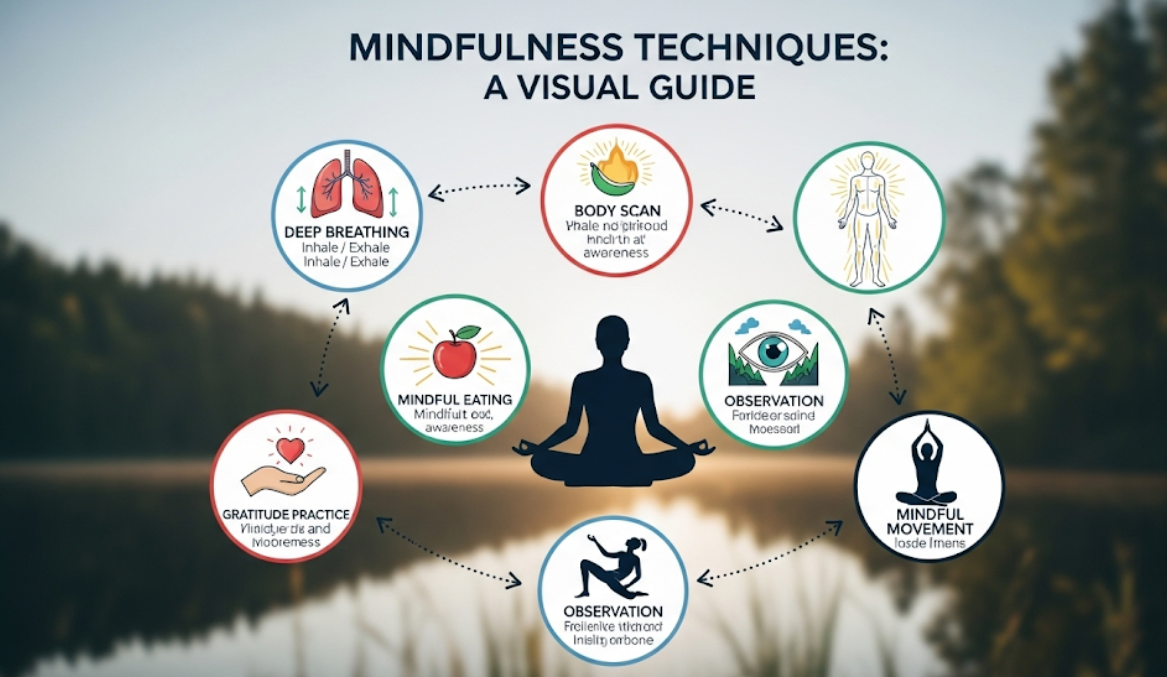
Mindful Listening: Deeper Connections
This practice is great for improving relationships and being more present in conversations:
With others:
- Listen carefully to the speaker
- Pay attention to when your mind is preparing answers while they are talking
- Focus on tone of voice, emotion, body language, not just words
- Ask them clarifying questions instead of giving immediate advice
With sounds around you:
- Be still and listen to everything around you
- Observe them without judgment (i.e., see it but don’t categorize as good or bad)
- Include distant sounds, near sounds, as well as inner body sounds
- Practice for 5-10 minutes daily
Advanced Mindfulness Techniques
Loving-Kindness Meditation
This one is certainly a way to practice compassion with yourself and others:
- Start with yourself — “May I be happy, may I be healthy, may I be at peace”
- Expand to friends and family — Visualize a loved one and make the same wishes for them
- Include neutral people — that acquaintance, or strangers
- Embrace difficult relationships – Challenging but powerful
- Open up to all beings — “Every living entity be happy, healthy and at peace”
Begin by spending 2 minutes on each of the categories.
Mindful Journaling for Self-Discovery
Access feelings and wisdom through writing combined with meditation:
Three-part journaling method:
- Free Write (5 minutes) — Write stream of consciousness without editing
- Gratitude reflection (3 minutes) — Write 3 things that you are grateful for and explain why
- Intention setting (2 minutes) — Write a mindful daily intention
Doing so will ensure you wake up grounded and focused each morning.
Mindfulness of Emotions
Being able to experience emotions without becoming overwhelmed by them, this is a critical ability:
The RAIN technique:
- Recognize what emotion is present
- Allow the emotion without resisting it
- Investigate where you experience it physically
- Non-attachment — Allow the emotion to flow naturally
And always remember: emotions are like the weather, they come, they peak and then naturally fade when we don’t try to fight them.
Building Your Daily Mindfulness Routine
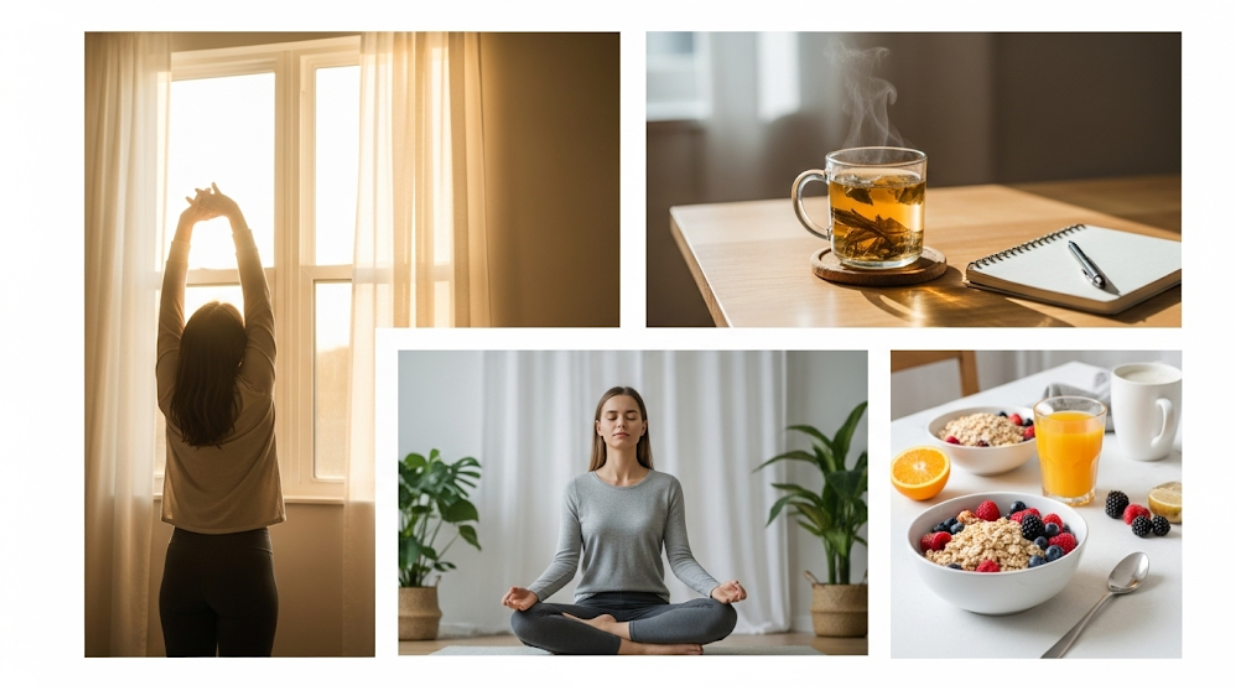
Morning Practices: The Beginning of Your Day
5-minute morning routine:
- While still in bed – 5 conscious breaths
- Set daily intention — Picking one mindful goal to have each day
- Practice mindful first activities — brush teeth, take a shower or drink your coffee with full attention
Workday Mindfulness: How To Stay Present In High-Stress Environments
Micro-practices for busy schedules:
- Conscious transitions — Breathe three times between tasks
- Email meditation — Reading an email in its entirety before responding
- Bathroom breaks — Use restroom visits as mindfulness prompts
- Mindful lunch — one undistracted meal a day
Evening Wind-Down: End with Peace
Bedtime routine:
- Digital sunset — Turn off devices 30 minutes before bed
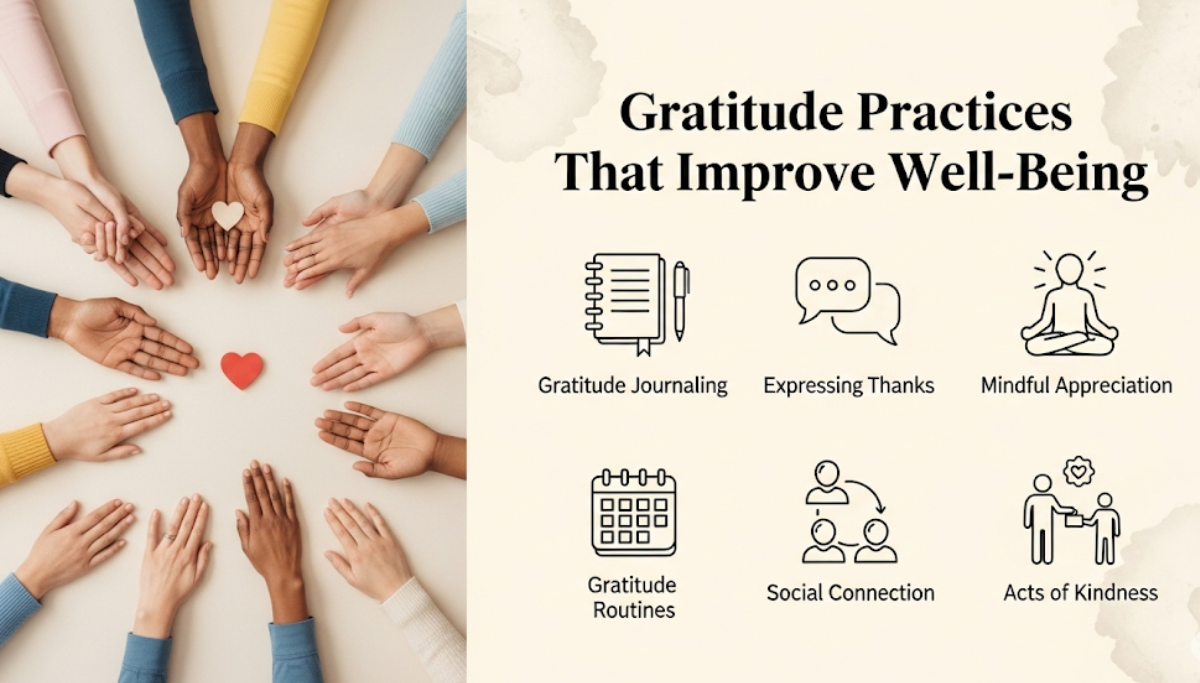
- Gratitude practice — Three things in your life that made you feel good today
- Body scan — head to toe release of tension
- Breath focus — Use 4-7-8 breathing to prepare for sleep
Common Challenges and Solutions
“My Mind Is Too Busy”
This is the primary concern for newbies. Remember:
- It is natural and normal for our mind to keep busy
- Simply realizing you have a busy mind IS mindfulness
- Every time you bring your attention back, it’s like a rep in building that mindfulness muscle
- Begin with shorter practices (2-3 minutes) and work up gradually
“I Don’t Have Time”
Mindfulness does not demand extra time — it changes the time you already spend:
- Practice while brushing teeth (2 minutes)
- Be mindful during your commute
- Take mindful breaths while waiting in line
- Use transition moments between activities
“I Fall Asleep During Practice”
If you’re falling asleep:
- Practice with eyes slightly open
- Sit upright instead of lying down
- Practice earlier in the day when you’re more alert
- Accept that sometimes your body needs rest
Measuring Your Progress
Weekly Mindfulness Check-In
Here are some simple questions to track your progress:
Stress levels: How stressed were you, on a scale from 1 to 10, this week? Sleep quality: How well did you sleep on average? Emotional recovery: How long did it take you to bounce back from negative emotions? Focus ability: How good were you at concentrating on your tasks? Relationship quality: How present were you in conversations?
Signs of Growing Mindfulness
- You catch stress sooner and are able to respond instead of react
- You will get more pleasure out of simpler things
- You worry less about “what if” and “I wish I had”
- You become so much more compassionate with yourself and others
- You can sit with difficult feelings without being overwhelmed
Creating Long-Term Success
Start Small and Build Gradually
A lot of people bite off more than they can chew early on. Instead:
- Start with 5 minutes per day the first week
- Increase by 2-3 minutes each week until you get to 15-20 minutes
- Pick one method and do it consistently before choosing another
- Small wins should be celebrated and patience is key
Find Your Community
Mindfulness is easier to keep up with support:
- Look for local meditation groups
- Use community-based mindfulness apps
- Practice with family or friends
- Participate in online mindfulness forums
Adapt Practices to Your Life
The best mindfulness practice is the one you will actually do. Modify techniques to fit your:
- Schedule constraints
- Physical limitations
- Personal preferences
- Life circumstances
Your Mindful Journey Starts Now
Mindfulness is not about becoming a completely different person, you are becoming more fully yourself. These methods are effective in helping you make peace, let go of stress and connect better with your life at a deeper level.
Choose one method that suits you. Experiment with it for a week before integrating another. Don’t forget, consistency matters more than duration; 5 minutes a day is more effective than one hour once a week.
You will probably observe in time that mindfulness seeps into other areas of your life, gradually extending beyond formal practice sessions. You will be more engaged during your conversations, more present in the moment, and better able to face life’s challenges with grace and wisdom.
Mindfulness is not about being perfect; it’s about practice. In every moment lies a fresh chance to awaken, to breathe with presence and to participate fully in the gift of being alive. Your mindful journey begins with the next breath you draw. Make it a conscious one.