
Do the numbers, etc. in your birth chart appear to be like a foreign language? You’re not alone! Though it may seem complicated to read a birth chart, this process is easier than you might think. From the basics to the finer details, this complete guide helps you understand how to interpret your natal chart, step by step.
What is a Birth Chart, Anyway?
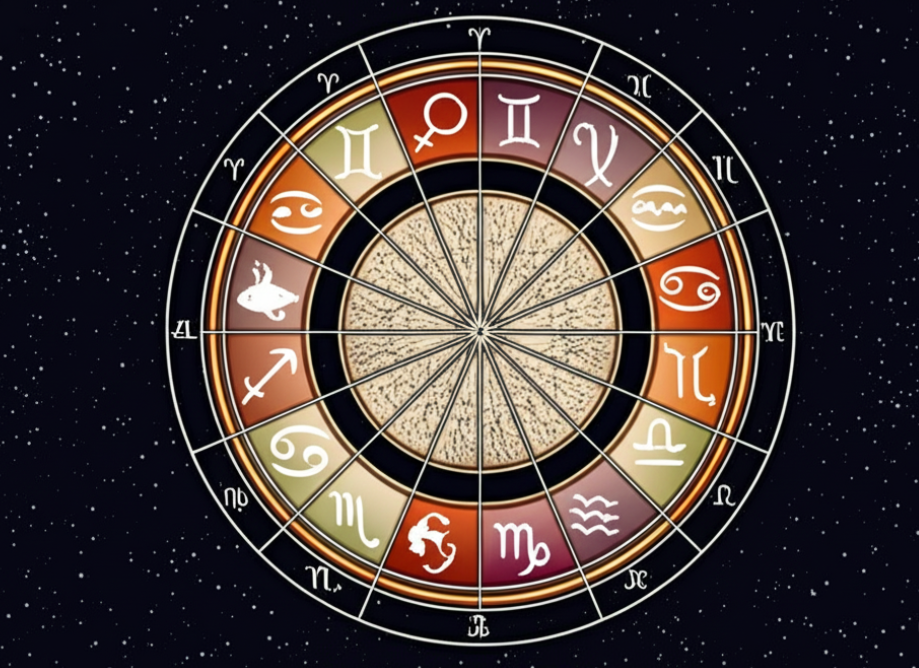
A birth chart — or a natal chart — describes your astrological personality, and is actually just a celestial picture of the unchangeable snapshot of the skies that can be pinned down to the specific moment you were born. You can think of it as your own personal astrological DNA — it provides a 2D view of where all the planets, including the sun and moon, were in their positions when you first took your initial breath.
This map is comprised of 12 pieces called houses, which are laid out with the different zodiac signs and planets spread throughout. All of this sounds like an odd reflection and it is, but its elements capture a portion of your personality tale from your instincts to inherent talents and even darkest traits.
Your Birth Chart Is A Big Deal Beyond Daily Horoscopes
Newspaper horoscopes only assess the position of your sun sign (where the sun was in relation to other stars when you were born), but when you take an astrological birth chart into account, there are lots more factors that can be considered:
- The 10 luminaries: sun, moon, mercury, venus, mars, jupiter, saturn, uranus, neptune and pluto
- 12 zodiac signs
- Twelve houses signify various elements of life
- Aspects (angles between planets)
- Rising sign (your outer personality)
That’s why your birth chart is so personal and specific: no two charts are exactly the same, even for twins born a few minutes apart!
Getting Your Birth Chart
So, before getting into the nitty-gritty of interpretation, you must have a chart to read!
Essential Information Required
To cast a precise birth chart, gather the following information:
- Birth date (month, day, year)
- Exact time of birth (to the minute if available)
- Birth location (city, state, country)
Pro Tip: If you are not sure of the timing at which you were born, get them from your birth certificate or ask family members. If not, you could end up with a different rising sign as well as houses.
Best Free Birth Chart Websites
There are quite a few good and free websites that generate charts for you:
- Astro.com — The best source for comprehensive and detailed charts
- Cafe Astrology — Easy to use, detailed explanations
- Astrolabe — Clean interface, good for beginners
- Co-Star — Contemporary app with sharing features
Enter your birth details and out pops a pretty circular chart laden with symbols and lines.
The Big Three: Your Astrological Foundation
The “Big Three” are the three things that make your entire birth chart reading start to take shape, as they all help create your personality.
Your Sun Sign: The Real You
Your sun sign is essentially your core; to many, it is what you regard as yourself. It is what you are when you are most true to form.
How to Find It: Look for the ☉ symbol in your chart.
What it means:
- Your basic personality traits
- How you express yourself
- Your life goals and ambitions
- Your creative energy
- What makes you feel alive
Your Moon Sign: Your Private Life
Your sun sign indicates your external personality while your moon shows the state of your emotions and the way you deal with feelings, moods, and any change. Its actions are hidden on the inside for only you to see.
Where To Find It: Look for the ☽ symbol on your chart.
What it reveals:
- Your emotional responses
- What you need to feel secure
- Your instinctive reactions
- How you process feelings
- Your nurturing/feminine aspect of yourself
Your Rising Sign: Your Social Mask
This is also your ascendant — this is how others see you and how you meet new situations often.
Where to find it: It is the sign on the left of your chart, that starts the first house.
What it shows:
- Your first impression on others
- Your natural defense mechanisms
- How you handle new experiences
- Your physical appearance tendencies
- Your approach to life
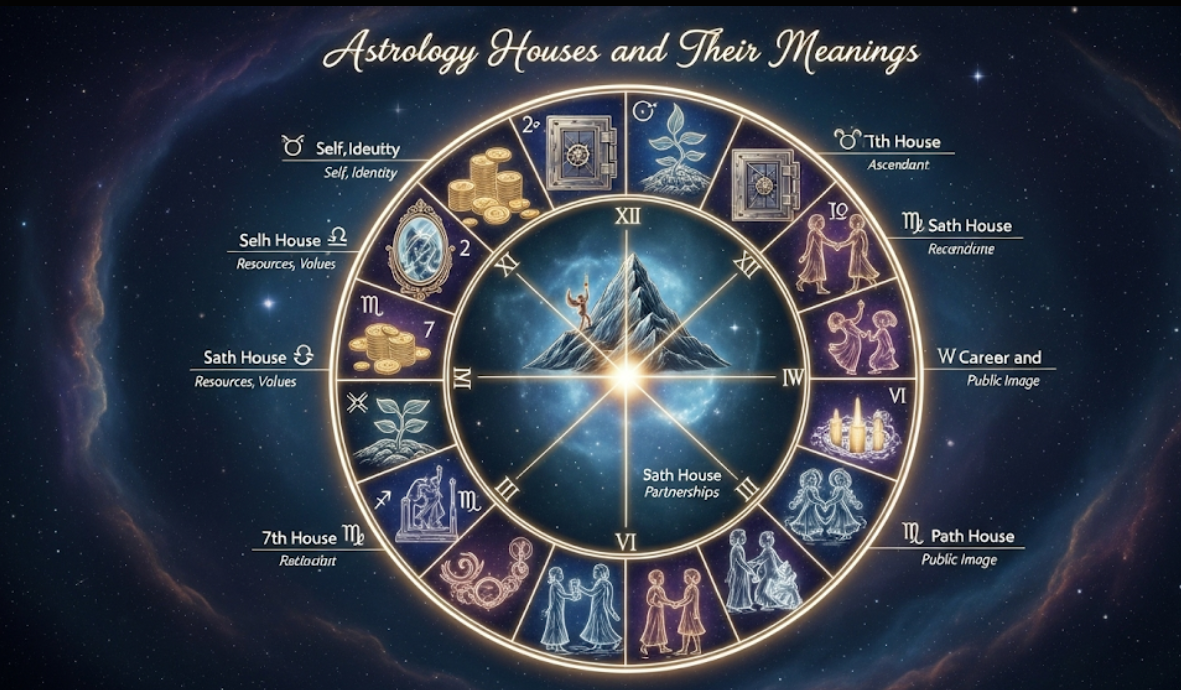
Interpreting the 12 Houses: Areas of Life
The birth chart is split up into 12 houses, each one ruling a different field in life. Houses are the “where” of astrology – they represent where in your life your planetary energies are likely to emerge.
Houses 1-6: Personal Development
1st House – Your Identity
- Physical appearance
- First impressions
- Personal style
- How you start things
2nd House – Your Resources
- Money and possessions
- Personal values
- Self-worth
- Material security
3rd House – Your Communication
- Speaking and writing style
- Siblings and neighbors
- Short trips
- Learning preferences
4th House – Your Roots
- Home and family
- Your past and childhood
- Real estate
- Emotional foundation
5th House – Your Creativity
- Romance and dating
- Children and creativity
- Hobbies and fun
- Risk-taking
6th House – Your Daily Habits
- Work and health
- Daily routines
- Service to others
- Pets and small animals
Houses 7-12: Social Connections
7th House – Your Relationships
- Marriage and partnerships
- Open enemies
- How you relate to others
- Legal matters
8th House – Your Transformations
- Shared resources
- Intimacy and sexuality
- Death and rebirth
- Other people’s money
9th House – Your Higher Learning
- Philosophy and religion
- Higher education
- Long-distance travel
- Publishing and teaching
10th House – Your Career
- Reputation and status
- Career achievements
- Public image
- Relationship with authority
11th House – Your Community
- Friends and groups
- Hopes and dreams
- Social causes
- Technology and innovation
12th House – Your Subconscious
- Hidden strengths and weaknesses
- Spirituality and meditation
- Karma and past lives
- Self-undoing patterns
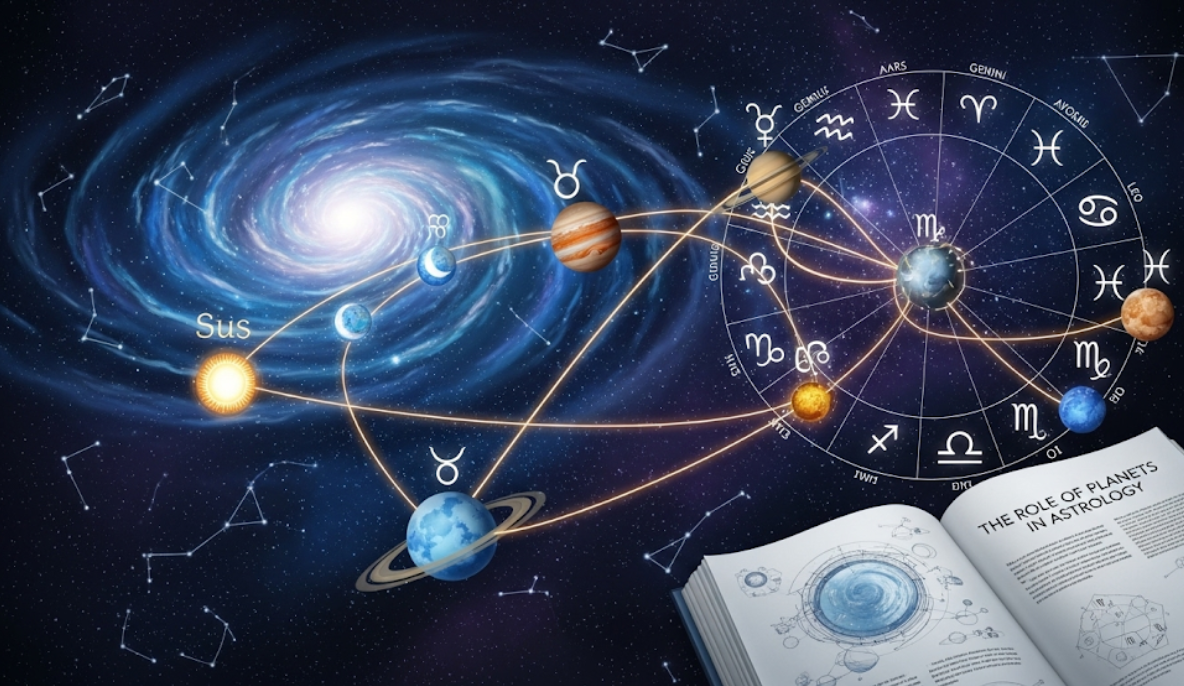
Planetary Forces: What Each Planet Governs
Every planet in astrology governs different life themes and some basic traits we have as a person. Here’s your quick reference guide:
Personal Planets (Affect Daily Life)
Sun ☉ — Core identity, ego, life purpose
Moon ☽ — Emotions, instincts, subconscious
Mercury ☿ — Communication, thinking, learning
Venus ♀ — Love, beauty, values
Mars ♂ — Action, passion, drive, anger
Social Planets (Shape Life Phases)
Jupiter ♃ – The Great Benefic
- Expansion and growth
- Luck and opportunities
- Higher learning and wisdom
- Optimism and faith
Saturn ♄ – The Great Teacher
- Discipline and structure
- Life lessons and challenges
- Authority and responsibility
- Long-term goals
Outer Planets (Generational Influences)
Uranus ♅ — Revolutionary Power (7-year cycles)
- Innovation and rebellion
- Sudden changes
- Technology and progress
- Independence
Neptune ♆ — The Dreamer (14-year cycles)
- Spirituality and intuition
- Dreams and illusions
- Creativity and compassion
- Addiction and escapism
Pluto ♇ – The Transformer (12-29 year cycles)
- Power and transformation
- Death and rebirth
- Hidden truths
- Psychological depths
How Planets Talk to Each Other: Reading Planetary Aspects
If your chart is a blueprint, aspects are the way planets talk to each other in that language. They show up as lines that connect planets to show how your personality traits sync or clash.
The Five Major Aspects
Conjunction (0°) – Planets are at the same position
- Symbol: Double line, planets very close
- Effect: Energies blend and intensify
- Example: Sun conjunct Mercury = excellent communication skills
Sextile (60°) – Harmonious and opportunistic
- Symbol: Blue line
- Effect: Easy cooperation between planets
- Example: Venus sextile Mars = ease with attraction
Square (90°) – Tension, challenge
- Symbol: Red square line
- Effect: Internal conflict requiring growth
- Example: Moon square Saturn = emotional restrictions
Trine (120°) – Natural talent and ease
- Symbol: Blue triangle line
- Effect: Effortless harmony and gifts
- Example: Jupiter trine Mercury = natural teaching ability
Opposition (180°) – Balance and awareness
- Symbol: Red horizontal line across the chart
- Effect: Opposites that need to be balanced
- Example: Sun opposite Moon = internal identity conflict
Quick Aspect Reading Tips
- Harmonious aspects: Trines/Sextiles = Easy flow in life
- Challenging aspects: More squares = many opportunities to grow
- Aspect patterns: Grand trines, T-squares & stelliums carry additional significance
- Orbs: Tight aspects (0-5 degrees) are stronger
A Step-by-Step Guide To Reading Birth Charts
Step 1: Start with The Big Three (10 minutes)
- Identify your sun, moon and rising signs
- Read their basic meanings
- Notice which houses they’re in
- Consider how they work together
Example: Gemini sun in 10th house, Cancer moon in 11th house, Virgo rising = professional communicator (Gemini sun) who has emotional needs from peers (Cancer moon) while appearing helpful and orderly to others (Virgo rising).
Step 2: Find Your Personal Planets (15 minutes)
- Locate Mercury, Venus, and Mars
- Note their signs and houses
- Check for any major aspects
- Consider how they interact with your Big Three
Step 3: Analyze Your Social Planets (10 minutes)
- Find Jupiter and Saturn positions
- Look at their house placements
- Look for aspects to personal planets
- Consider generational vs. personal influence
Step 4: Identify Chart Patterns (15 minutes)
- Count harmonious vs. challenging aspects
- Check for aspect patterns (T-squares, grand trines)
- Pay attention to which planets are most aspected
- Consider overall chart balance
Step 5: Synthesize Everything (20 minutes)
- Look for recurring themes
- Notice contradictions that need balancing
- Identify your strongest planetary influences
- Consider how everything works together
Common Mistakes to Avoid in Birth Chart Reading
Even seasoned astrologers make these mistakes — here’s how to avoid them:
Mistake #1: Reading Signs in Isolation
Simply saying “I’m a Scorpio sun” isn’t enough. Use the whole chart. A Scorpio Sun in the 2nd house is not at all like a Scorpio Sun in the 10th house.
Mistake #2: Ignoring House Positions
House placement often matters more than sign. Venus in Aries in the 2nd house (possessive in love) is different from Venus in Aries in the 11th house (friendship-focused relationships).
Mistake #3: Overemphasizing Negative Aspects
Challenging aspects aren’t “bad” — they’re growth opportunities. Most successful people have challenging aspects in their charts that forced them to develop strength.
Mistake #4: Forgetting the Orbs
Not all aspects are exact. For example, a planet at 29° Gemini and another at 1° Cancer are actually ‘conjunct’ (even though they’re in different signs). Always consider actual degrees, not just signs.
Mistake #5: Taking Everything Literally
Astrology is symbolic. “Death” in the 8th house doesn’t mean actual death but transformation and rebirth.
Going Beyond Basic Birth Chart Reading
After you have mastered the basics, here are advanced techniques to make your practice more engaging:
Advanced Techniques to Explore
Chart Rulers and Dispositors
- Locate your chart ruler (the planet that rules your ascendant)
- Follow the dispositor chain to find the “final dispositor” in your chart
- This gives insight into the underlying theme of your chart
Planetary Returns
- Saturn returns around age 29
- Jupiter returns every 12 years
- These represent important life cycle milestones
Progressions and Transits
- Secondary progressions reveal character development
- Transits show current planetary influences
- Both help predict timing of major life events
Asteroids and Fixed Stars
- Incorporate Chiron, Juno, Vesta for more detailed readings
- Consider fixed star influences for additional guidance
- These provide nuanced personality information
Welcome to Your Astrological Journey
Learning to read your birth chart is like studying any language — it takes time to master. Start with your Big Three, then gradually layer in more complex symbols and meanings as you gain experience.
Astrology isn’t about predicting a set future — it’s about understanding your inherent patterns, talents, and lessons. Your birth chart is a helpful tool for self-knowledge, not a limitation on who you can become.
Most importantly, approach your chart with curiosity and without judgment. Every placement, even the challenging ones, teaches you something about how you’re designed as a whole person. The more you explore the vast world of astrology, the more you’ll discover that your birth chart isn’t just a blueprint of who you are — it’s a roadmap for every potential you could become.
Start your journey today by getting your birth chart and following this step-by-step guide. Take notes, ask questions, and most importantly: have fun discovering the cosmic story written in the stars at your birth. Your chart belongs to you, and now you have the keys to read it!