If you have ever noticed that on a sunny summer day it just makes you feel alive, but on the contrary, during those dark winter mornings you struggle to get out of bed? You’re not alone. From our sleep patterns to our productivity at work or school, everything seems to be significantly impacted by the changing seasons.
The obvious correlation of seasonal changes and human nature is not a figment of your imagination but has actual scientific backing. The best way to understand the seasons and current environment is to look at how our bodies are attuned to changes in season; this can greatly affect how we feel and operate throughout the year.
This complete guide will explain why every season impacts your energy and motivation, what causes those changes to take place, and most importantly, how you can sustain optimal well-being all year round.
How Do Changes in Seasons Impact Your Energy?
Impact of Light on Circadian Rhythm
Your body follows the circadian rhythm, which is a 24-hour biological clock. This biological clock regulates your sleepiness, alertness, appetite and physiology during the 24-hour cycle. The single strongest influence on this clock is exposure to light – especially sunlight.
Natural light to your eyes helps control the signals that go to your brain for:
- Melatonin production (the sleep hormone)
- The release of cortisol (stress and wakefulness hormone)
- Body temperature fluctuations
- Mood-regulating chemicals like serotonin
Suffering Through The Winter Blues: Seasonal Affective Disorder
A subset of SAD called winter depression affects only about 5% of the population, with these people all wanting a vacation to somewhere sunny. Yet others contend with subtler changes in mood throughout the seasons that may nevertheless have a marked effect upon their energy and motivation.
Seasonal energy changes normally manifest as these symptoms:
- Daytime fatigue or low energy
- Difficulty concentrating on tasks
- Increased appetite (especially for carbs and sweets)
- Mood swings or irritability
- Isolating oneself or loss of interest in things
- Sleep disturbances (too much or too little sleep)
Spring: Nature’s Energy Reboot
The Great Awakening
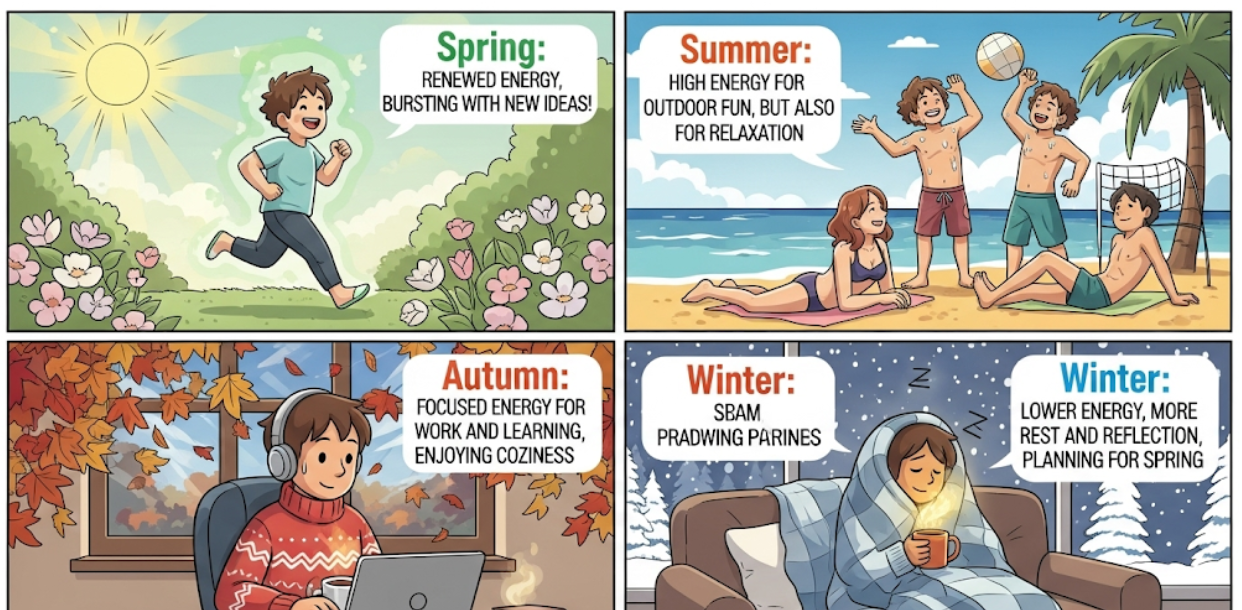
Spring is that time when nature goes through a complete cycle of renewal and rebirth, and so do we as humans. The increased number of daylight hours and warmer temperatures are usually what help many people to automatically feel some energy and motivation.
Why spring boosts your energy:
- Reset your circadian pattern — By getting more sunlight and exposure to fewer artificial lights at night, your brain’s internal clock resets
- When the weather is warmer, it is easier to have fun outside
- By having longer daylight hours, we are able to do more
- Exposure to sun increases the production of Vitamin D naturally
- Better access to fresh air and green spaces
Spring Energy Optimization Strategies
Outdoor Activities to Try:
- Walk or jog in the fresh morning air
- Gardening or tending to plants
- Outdoor recreation, such as tennis, hiking or cycling
- Outdoor picnics in parks or nature areas
Indoor Habits for Spring Success:
- Fresh air circulation – open windows regularly
- Developing a spring cleaning habit to clear out your space
- Start that new thing which you have been procrastinating about
- Start adjusting the time you go to bed to get used to going to bed early in the evening and use daylight saving hours as an opportunity for earlier light mornings
Common Spring Energy Challenges
As awesome as spring may be in many ways, for some people it can have some difficulties:
- Spring allergies are also a huge energy and fatigue drain
- Outdoors activity ramps up while restored activity leads to rapid calendar changes
- Spring is peak socializing season as life gets better after winter hibernation
Summer: Peak Performance Season
Maximum Energy Potential
If you consider summer, it is usually when most people have the most energy. Those endless days and long hours of warm weather and plenty of sunshine produce the perfect climate for high energy levels and serious motivation.
Summer energy advantages:
- Late sunset, early sunrise (extended daylight activity time)
- Physical activity as well as outdoor activities are perfect to be performed outside in summer
- Less stress and more fun (who doesn’t want to be in vacation mode?)
- Social opportunities are more abundant
- Highest levels of vitamin D for the year
Summer Energy Management Table
| Time of Day | Energy Level | Best Activities | Tips for Success |
|---|---|---|---|
| Early Morning (5-8 AM) | High | Exercise, creative work, nutrition | Plan the day and wake up with sun |
| Mid-Morning (8-11 AM) | Peak | Important tasks, meetings | Appropriate times to tackle tough items |
| Afternoon (11 AM-3 PM) | Medium-High | Social activities, household tasks | Ideally place a short break here |
| Late Afternoon (3-6 PM) | Variable | Relaxation, personal projects | Take shade breaks; consume water |
| Evening (6-9 PM) | Medium | Fun activities and light social activities | Start winding down physically and mentally |
| Night (9+ PM) | Low | Rest for another productive day | No screens an hour before sleep |
Avoiding Summer Energy Pitfalls
Beware of the 5 Most Common Energy Thieves of Summer:
- Dehydration — Hot weather raises fluid requirements
- Overexertion — Getting burnt out due to going hard and too fast
- Poor sleep — If you are working long days, your sleep might not be the best
- Heat exhaustion — Impairs physical performance due to high temperatures
- Social exhaustion — Having too much to do
Fall: The Natural Slowdown
Preparing for Winter
To me, fall is this transitional period where your body begins to anticipate the coming darker and colder months. However, this organic deceleration is not necessarily a bad thing and can be of great value to you; now you have the opportunity to take your time and reflect upon some things, plan your future steps out in detail and establish new healthy routines.
Fall energy characteristics:
- Shortening of the days which affects mood and energy
- Lower temperatures for increased comfort by some people
- Harvest season mentality = prepare and plan
- Back-to-school energy might be forming new motivation patterns
- Indoor activities start to sound more enticing and cozy
Strategies for Maintaining Fall Energy
Lighting Solutions:
- Establishing a morning routine with bright light therapy lamps
- Open shades during daylight hours
- Change light bulbs to full-spectrum in main rooms
- Maximize peak sunlight hours (usually between 10 AM — 2 PM)
Nutrition for Fall Energy:
- Add foods to your diet that are rich in seasonal vitamins and minerals
- Opt for natural carbohydrates
- Eat foods that support your immune system to prevent illness
- Maintain regular meal schedules
Exercise Adaptations:
- Move activities indoors where needed
- Try new indoor fitness routines
- Sign up for fall sports leagues or fitness classes
- Take advantage of cool weather to hike and do outdoor activities
Winter: Surviving the Energy Low
The Hibernation Response
Unless we are winter enthusiasts, most of us find winter the hardest time to get energy and motivation together. Shorter days, cooler temperatures and less sun exposure can send you into a hibernation state that could very well impact how you go through the day.
Winter energy challenges:
- Low levels of natural light (in some regions it may be only 8-9 hours per day)
- Winter’s long days and cold temps that keep us inside
- Holiday stress and irregular schedules
- More sickness that sucks the little energy you have left
- Social isolation from weather-related limitations
Winter Energy Survival Guide
Light Therapy Options:
- Light therapy boxes — Spend between 20-30 minutes under bright light every morning
- Dawn simulation wake-up lights
- Replace regular bulbs in key areas with full-spectrum bulbs
- Light visors — A portable option for those on the go
Indoor Activity Ideas:
- Home workout routines/home fitness classes online
- Hobbies like painting, writing or crafts
- Cooking and baking projects
- Participating in reading challenges or upskilling yourself online
- Indoor gardening with grow lights
Social Connection Strategies:
- Schedule video calls with friends regularly
- Get into indoor clubs or hobby groups
- Volunteer for community organizations
- Game nights as an indoor social activity idea
Creating Your Winter Wellness Routine
Daily Structure for Winter Success:
Morning (6-9 AM):
- Do light therapy first thing in the morning
- Maintain consistent wake times
- Have a protein-rich breakfast to fuel the day
Midday (9 AM-3 PM):
- Opt for windows or go outside whenever possible
- Consume vitamin D supplements as prescribed by healthcare providers
- Do exercise or movement
Afternoon (3-6 PM):
- Combat the 3 PM energy slump with healthy snacks
- Save this time for talking to your family or friends
- Continue light exposure when available
Evening (6-9 PM):
- Practice relaxation techniques or meditation
- Prepare healthy, warming meals
- Engage in enjoyable, low-energy activities
Night (9+ PM):
- Maintain consistent bedtimes
- Limit screen exposure before sleep
- Create a cozy, restful environment
Year-Round Energy Management Strategies
Strategies That Work Season-In/Season-Out
Sleep Hygiene Fundamentals:
- Keep your sleep time and wake-up time the same every day
- Create a comfortable sleep environment
- Avoid caffeine after 2 PM and reduce consumption
- Establish relaxing bedtime routines
Nutrition for Stable Energy:
- Eat regular meals to keep your blood sugar balanced
- Include protein with every meal to keep you full and energized throughout the day
- Stay hydrated throughout the day
- Reduce processed foods and sugar
Exercise as Energy Medicine:
- Aim for 150 minutes a week of moderate activity
- Include both cardio and resistance training
- Make the most of seasonal activities
- Listen to your body and modify intensity
Creating Your Seasonal Energy Calendar
Preparing For Success During The Year
January-March (Winter/Early Spring):
- Focus on light therapy and getting vitamin D
- Maintain indoor exercise routines
- Gradually increase outdoor time
April-June (Spring/Early Summer):
- Take advantage of increasing daylight
- Begin new projects and goals
- Establish outdoor activity routines
July-September (Summer/Early Fall):
- Maximize energy during peak season
- Form habits that will last through the dark winter months
- Prepare for seasonal transitions
October-December (Fall/Early Winter):
- Ease into shorter day routines
- Focus on maintaining social connections
- Set up your light therapy and indoor activities
Technology Tools for Seasonal Wellness
Apps and Devices That Help
Light and Sleep Tracking:
- Apps with light meters that allow daily exposure to be monitored throughout the day
- Devices that track sleep to improve your rest
- Natural wake-up sunrise alarm clocks
Fitness and Activity:
- Home workout apps for winter
- Devices that count steps to track movement goals
- Seasonal activity suggestion apps
Mental Health Support:
- Mood tracking apps to notice and search for patterns
- Meditation and mindfulness apps
- Online therapy platforms (e.g., Talkspace, BetterHelp)
When to Seek Professional Help
Recognizing Serious Seasonal Impact
While seasonal variations in energy are natural, for some, symptoms may be so severe that they interfere with their normal course of life. You should consider seeking help from a healthcare provider if you experience:
- Frequent sadness or feelings of hopelessness
- Changes in appetite or weight
- Impaired performance in work, school and home
- Lack of interest in activities you normally enjoy
- Thoughts of self-harm or suicide
- Constant and persistent fatigue that worsens over time even with rest
Professional treatment options may include:
- Professional light therapy
- Therapy to learn how to deal with stress
- Medication to address seasonal depression
- Lifestyle modification programs
- Support groups with others who have had the same experience
Building Your Personal Seasonal Strategy
Assessment and Planning
Step 1: Monitor Your Patterns — For two to four weeks, keep a daily log of:
- Energy levels (1-10 scale)
- Mood throughout the day
- Sleep quality and duration
- Activity levels and types
- Weather and light exposure
Step 2: Identify Your Seasonal Triggers:
- Which seasons feel most challenging?
- Which weather conditions affect you the most and under what circumstances?
- Does the increasing/decreasing length of the days affect your normal schedule?
- At what time would you be the most motivated and full of energy?
Step 3: Create Your Action Plan — Generate tactics to fit your patterns by season:
- Light exposure goals and methods
- Custom exercise routines for each season
- Social activity plans
- Professional support resources
- Emergency strategies for difficult periods
Conclusion: Embracing Your Seasonal Rhythms
Seasonal changes will always affect your energy levels and motivation as long as you are human. The secret to getting the results you want is not in fighting the way your body wants to work, but in understanding that how your body naturally operates — which nature will inevitably bring back around due to millions of years of evolution — can be used as an advantage.
By following the tips in this guide, you can keep your energy and motivation levels up all year. When developing your seasonal wellness routine, remember that you might need something different from someone else, and that is completely okay. Just be patient with yourself as you find what works for you.
Keep it simple, so begin with some small shifts and then work towards a more holistic approach to light, activity, food, rest and connection. By committing to the journey and focusing your efforts by applying these tools, seasonal challenges can become stepping stones in a path that leads you down a road of enlightenment and conscientious self-care.
And last but not least, go easy on yourself during tough seasonal changes. Energy is going to come and go with the seasons, and seasonal transitions and struggles are a part of life! Help-seeking is a major strength, not a weakness. Seasonal management is a part of your individual year-round wellness journey, and each small step you take towards better managing symptoms during a particular season is something to celebrate.
Whether you find yourself suffering through winter or coasting on that high energy wave that summer brings, remember that when you know and anticipate seasonal changes, you are in control of your wellness journey regardless of what Mother Nature has to offer.