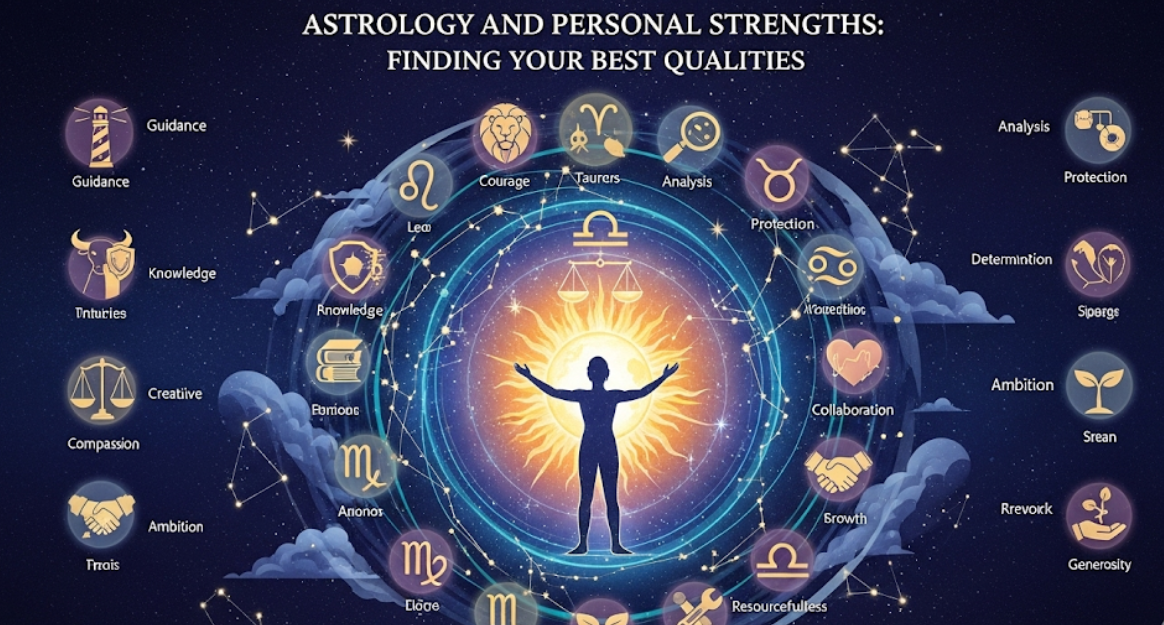

Why can some days be almost effortlessly productive, while others make for a seemingly stressful and jarring experience? Maybe that will be written in the stars. The ancient science of studying celestial movements and their impact on human behavior, astrology can provide great tools in this area of optimizing your daily schedule to increase productivity.
Astrological time management has become increasingly popular as a growing number of people are realizing they get more out of their day when they align their work output with periodic cyclical energy variations. Align your tasks with planetary influences and your unique birth chart to work smarter, not harder — simply plan in advance what you want to do when!
This ultimate guide will give you everything you need to know how to tap into astrological insight for improved time control whether or not the individual is an experienced or a beginner, all from what it’s and its background origin.
Astrological Time Management Explained Using Science
How Planetary Cycles Affect the Collective Human Vibration
Astrology is a belief that the fundamental symbolic entities (e.g., planets, qualities) affect human behavior. Like a rock being pulled by the gravity of the Moon (which controls ocean tides), specific energy changes as it orbits us will influence our:
- Mental clarity and focus levels
- Physical energy and stamina
- Emotional stability and mood
- Decision-making abilities
- Creative inspiration and problem-solving skills
Your Personal Energy Blueprint
More broadly known as a natal chart, your birth chart functions as a cosmic blueprint:
- Sun sign – Where you shine Identity & Life force
- Moon – Your emotional needs and intuitive cycles
- Rising sign — The way you handle things and first impressions
- Planetary houses – Life sectors showing how and where various energies are incorporated
Daily Astrological Time Management Strategies
Moon Phases for Increased Productivity
Use the lunar cycle as an all-natural 28-day project planning framework:
New Moon (Days 1-3)
Great for: New projects, intention setting, brainstorming
Energy level: Rising but low
Time management tip: Utilize the quiet time to start planning your goals vs. extremely productive work.
Waxing Moon (Days 4-13)
Best for: Use to make progress, get stuff done, and connect with others
Energy level: Ascending
Time management tip: Set up important meetings, handle difficult work, and advancement on the past task in hand
Full Moon (Days 14-16)
Greatest strengths: Finishing tasks, making decisions, connecting with others
Peak Intensity Energy
Time Management Tip: Push for final deadlines, hold the impulses to start anything new (emotions are high).
Waning Moon (Days 17-28)
For: Review, editing, decluttering, releasing what does not serve you
Energy level: Nearly drained
Time management tip: Concentrate on the needs to be done, get your space organized, and see what you have gotten done from the list.
Planetary Hours: Ancient Timing Wisdom
Each day is divided into planetary hours with a certain planet ruling for specific periods. Here’s how to use them:
| Planet | Best Activities | Notes |
|---|---|---|
| Sun | Leadership tasks, presentations, important meetings | High-energy activities |
| Moon | Emotionally-driven planning and reflecting | Intuitive work |
| Mercury | Communication, learning and quick tasks | Mental activities |
| Venus | Creativity & relationship building | Social and artistic work |
| Mars | Challenging work and exercise | Physical activities |
| Jupiter | Big picture thinking & expansion activities | Growth-oriented tasks |
| Saturn | Organization & discipline/long-term planning | Structured work |
Weekly Astrological Schedule Optimization
The 7 energy themes happen each day of the week assigned to a specific planet:
- Monday (Moon) – Emotionally-driven planning and reflecting
- Tuesday (Mars) – Challenging work and exercise
- Wednesday (Mercury) – Communication, learning and quick tasks
- Thursday (Jupiter) – Big picture thinking & expansion activities
- Friday (Venus) – Creativity & relationship building
- Saturday (Saturn) — Organization & discipline/long-term planning
- Sunday (Sun) — Leadership tasks with personal development
Energy Management by the Zodiac: Seasons
Spring: Aries to Gemini Energy
March-May characteristics:
- High motivation and new beginnings
- Increased social energy
- Quick decision-making
Time management strategies:
- Embark on new projects when the sun is in Aries
- Network actively during Gemini season
- Balance the energy of movement and action with potential for rest and stability
Summer: Cancer to Virgo Energy
June-August characteristics:
- Emotional depth and nurturing focus
- Creative peak and self-expression
- Attention to detail and perfection
Time management strategies:
- Cancer Season: Focus on family + home projects
- Indulge in creative ventures under Leo season
- Organizing and systematizing during Virgo season
Fall: Libra to Sagittarius Energy
September-November characteristics:
- Relationship focus and collaboration
- Deep transformation and research
- Adventure and learning expansion
Time management strategies:
- Work in partnerships and collaborate during Libra season
- Scorpio season: get comfortable with research
- Travel and learning with Sagittarius season
Winter: Capricorn to Pisces Energy
December-February characteristics:
- Structure and long-term planning
- Innovation and humanitarian focus
- Intuition and spiritual connection
Time management strategies:
- Establish annual goals (Capricorn season)
- Brainstorm innovations during Aquarius season
- Take time to reflect and recharge this Pisces season
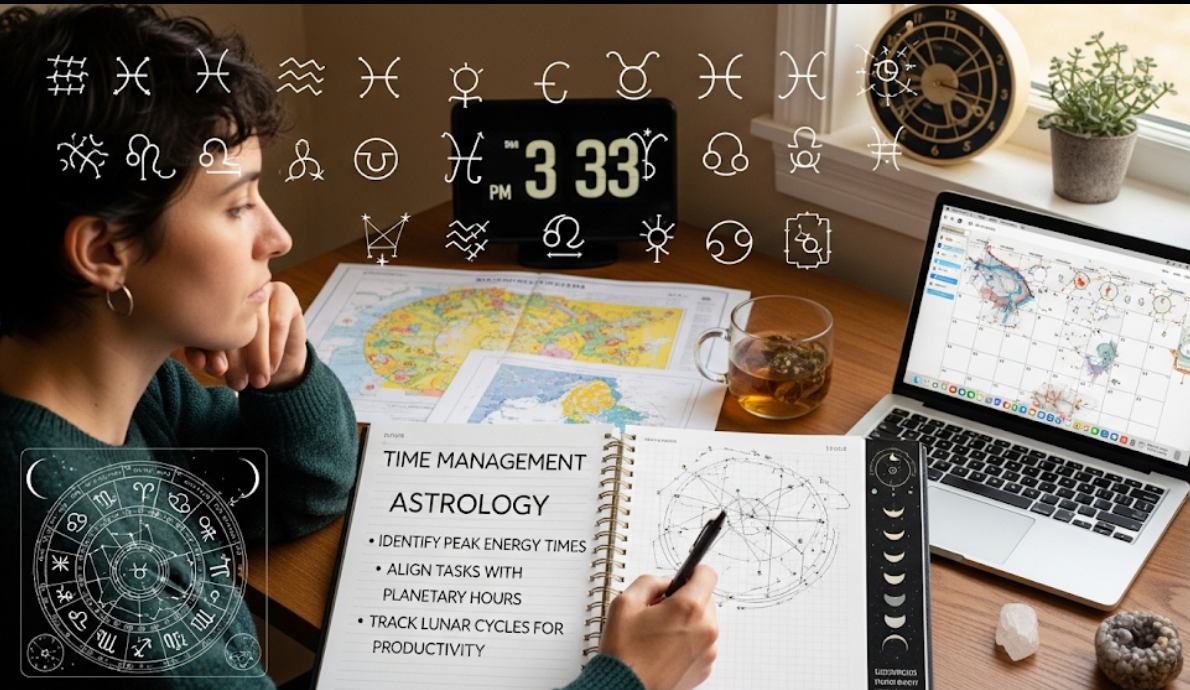
Personal Birth Chart Time Management
Finding Your Peak Performance Hours
When you naturally do well is uncovered by your full birth chart:
Fire Signs (Aries, Leo, Sagittarius) — Morning energy bursts; go-getters
Earth Signs (Taurus, Virgo, Capricorn) — Steady day-long energy and like routine
Air Signs (Gemini, Libra, Aquarius) — Mid-day clarity and social energy
Water Signs (Cancer, Scorpio, Pisces) — Evening intuition/emotional processing
Planetary Transits and Life Planning
Major planetary transits can affect everyone in varying degrees based on their natal chart:
Saturn Returns (Ages 29, 58, and 87)
Result: Large chunks of life restructuring periods
Time Management style: Think long term and eliminate all non-essential commitments
Jupiter Returns (Every 12 years)
Impact: Cycles of growth and opportunity
Approach to time management: Take risks, explore new territories
Mercury Retrogrades (3-4 times yearly)
Effect: Communication and technology headaches
Time management method: Check things twice, have backup systems, do not perform large-scale launches
Practical Tools and Techniques
Creating Your Astrological Calendar
Step 1: Get a lunar calendar app or make your own simple moon phase tracker on paper.
Step 2: Highlight significant planetary transits to your Sun, Moon and Ascendant sign
Step 3: Organize your schedule with color coding based on energy levels:
- Red: High energy, action-oriented tasks
- Blue: Calm energy, reflective work
- Green: Balanced energy, routine tasks
- Purple: Creative energy, inspiration work
Daily Astrological Check-ins
Begin each day with a simple 5-minute astrology check:
- Check the moon phase, and plan accordingly
- Pay attention to what planet is in charge of the energy today
- Review any potent transits occurring in your chart
- Managing expectations based on cosmic weather
- Pick 3 essentials for the day that fit well with the energy
Weekly Energy Planning Template
Monday Planning Session:
- Review the week’s astrological influences
- Fill in the day with compatible energy tasks
- Schedule time for Mercury retrograde travel delays
- Schedule self-care during challenging transits
Advanced Astrological Time Management Techniques
Electional Astrology for Important Events
Select convenient time to manage critical tasks:
Job interviews: Strong Mercury or Jupiter transits to your 10th house
Contract signings: No Mercury retrograde or lunar void-of-course
Product launches: Compatible new moon signs with positive aspects
Relationship conversations: Venus-ruled and harmonious moon aspects
Void-of-Course Moon Periods
These happen when the moon is no longer forming any major aspects before moving into a different sign:
What Happens: Effectiveness decrease, plans can fall apart
Time Management Strategy: Use for repeatable tasks, do not use for important decisions
Typical Interval: 30 minutes to up to a couple of days
Working with Your Chiron Healing Cycle
Chiron represents your deepest wound and greatest healing opportunity:
Every 50 years: Major healing opportunities arise
Time management application: Plan therapy, healing work or forgiveness practices during potent Chiron transits
Common Mistakes to Avoid
Over-relying on Astrology
Keep in mind that astrological timing is there to guide, not hinder:
- Seek guidance in astrology and not a map of absolutes
- Cosmic timing also means trusting your intuition
- Remember human free will and efforts are the most important
Ignoring Personal Rhythms
While general astrological criteria may be there, your individual energy patterns might be different as well:
- Track your personal productivity patterns
- Identify what time of the day you are most creative, focused or social
- Blend astrological wisdom with self-awareness
Forgetting Practical Considerations
Don’t sacrifice practical needs for perfect cosmic timing:
- Hit your deadlines (even in Mercury retrograde)
- Address urgent matters when they arise
- Balance your astrological ideals with real-world demands
Building Your Astrological Time Management System
Essential Resources and Apps
Free options:
- Time and Date lunar calendar
- Astro.com for birth chart calculations
- Co-Star or The Pattern for daily insights
Paid options:
- TimePassages for detailed transit information
- Astro Gold for serious research astrology charts
- Luna Solaria for electional astrology
Creating Sustainable Habits
Week 1-2: Track moon phases and your energy
Week 3-4: Schedule tasks according to planetary days
Month 2: Incorporate seasonal planning
Month 3: Add personal birth chart insights
Measuring Success
These are the metrics you should use to gauge your astrological time management ability:
- Energy levels during the day/week
- Completion rates of tasks during each moon phase
- Stress levels during challenging transits
- General quality of life and work–life balance
- Creative output during favorable periods
Conclusion: The Role of Cosmic Rhythms in Your Success
Time management by astrological sign provides an alternative to standard time management methods, combining the recognition of energy cycles in astrology with personal effectiveness. You can reduce the tension, feel more satisfaction, achieve better results with less effort when you work with planetary influences instead of fighting against them.
Astrology is a tool for self-awareness, and not the be all end all of things. You can start by simply keeping track of moon phases and planetary days, then work your way up to some of the more advanced techniques as you gain more confidence and experience.
The trick to managing time successfully, in the astrological context, is to walk between worlds; you must embrace cosmic wisdom and grounded action equally. Tuning our daily schedule to match the movement of the skies and aligning ourselves with planetary influence is an age-old way humans have synchronized with nature, providing much needed guidance through life’s complexities.
Get started on your cosmic productivity journey by tracking the moon phase now and organizing your week around it. Work with the stars instead of against them and your future self will be so grateful.
If you want to step into better work performance, stronger relationships, or just a more harmonious life in total then astrological time management is the master plan for success that speaks directly in the language of the universe. Have faith in the process, keep up your routine, and see what you will accomplish at an out-of-this-world level.