
Are you feeling stressed, anxious or just plain unhappy? You’re not alone. Millions of people face negative thoughts and emotions in their life daily. But what if there was an easy, free way to boost your mood, deepen your relationships and give you a greater sense of life?
It exists — and it is known as gratitude.
Thanking someone for holding open the door is not the only way to show extreme gratitude. If you can cultivate this mindset, it opens up an entirely new way of looking at the world and feeling about yourself. Gratitude is good for us because it trains our minds to look at life and see what’s right about it (vs. wrong or missing) — you’re also your own test subject.
My intent with this article is to share exactly how gratitude works and just why it’s so powerful at increasing our well-being — all rounded off nicely with practical and super simple gratitude practices you can start using today.
Gratitude Is Your Secret Weapon to Happiness
The Neuroscience of Gratitude
The brain is a muscle in this way — the more you use certain patterns of thinking, the stronger they get. Practicing gratitude is basically hardwiring your brain to notice and cling on to positive experiences or feelings.
More activity in the hypothalamus is a good thing (it regulates stress), as was increased production of dopamine, your brain’s “feel good” chemical. This also means that gratitude is not a replacement drug that makes you feel good – but it changes the structure of your brain in the long run.
Tangible Physical Health Benefits
Gratitude is not just good for your soul — it’s great for your physical health as well. Benefits of gratitude practice regular gratitude practitioners feel:
- How you can sleep better – Sleep instead of falling asleep from 3 hours hence if it is possible you would wake up fresh
- Improved immunity – Having fewer colds and recovering quicker from illness
- Reduces blood pressure – Easing stress on your heart and arteries
- Decrease in chronic pain – You literally feel better in your own skin
- More energy overall – Which means you also have better exercise performance and more drive to get stuff done throughout your day
Mental Health Improvements That Last
Its psychological benefits are even more striking. A practice of everyday gratitude can help you with:
- Improving symptoms of depression and anxiety
- Your life satisfaction and happiness forever in-general
- Building resilience during tough times
- Improving self-esteem and confidence
- Positively looking at life results
Effective Daily Gratitude Practices
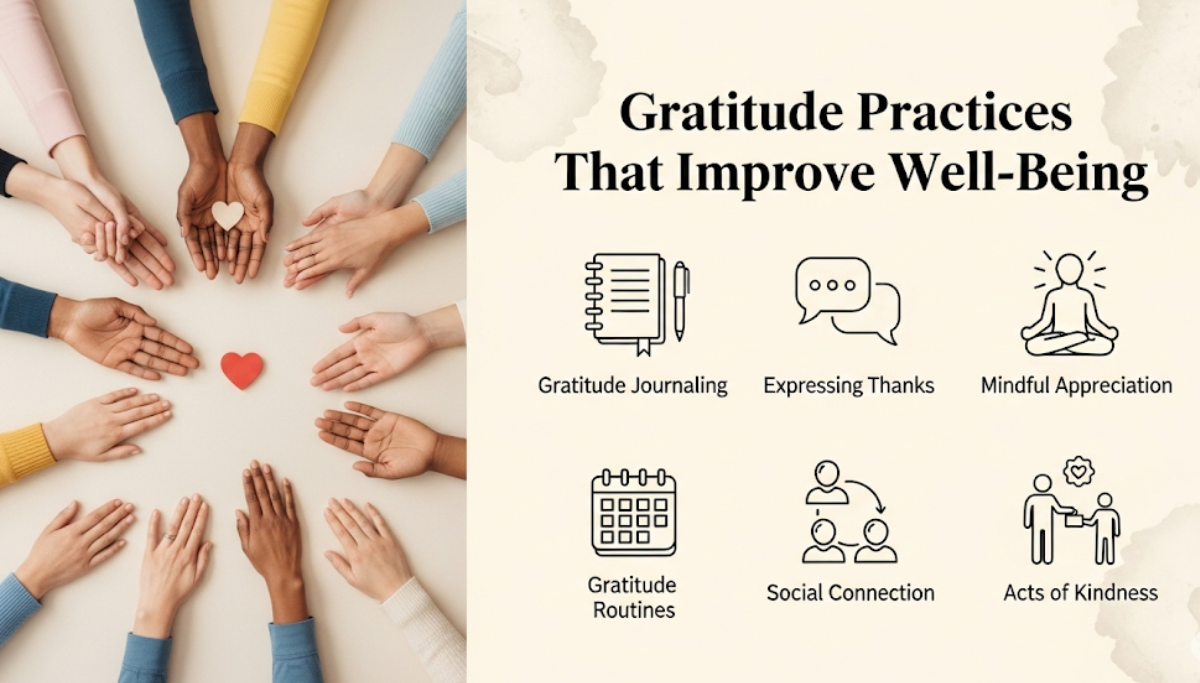
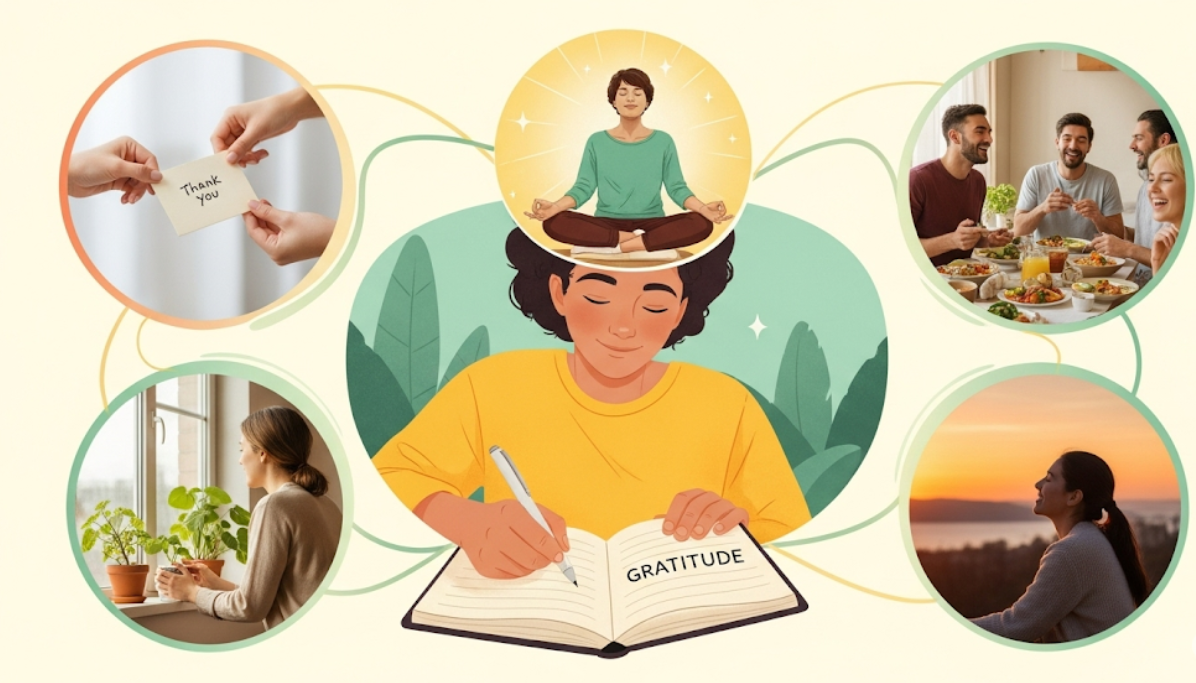
The Classic Gratitude Journal Method
Goal: Daily journaling, in notebook or digital app form, of things you’re grateful for
How to do it:
- Designate 5-10 minutes every day (morning or in the evening time works best)
- Make a list of 3-5 items you are specifically grateful for
- Add specifics of why you are grateful for each item
- Enjoying the company, the outings and the simple things opposed to just stuff
Example entries:
- “Today, I finished that project thanks to my coworker Sarah. Her mere kindness made that stressful day a little better.”
- “Grateful for the warm sun on my face at lunch. It relates to me spring is almost here.”
Pro tips:
- Specific instead of general (ie “my friend’s funny joke” vs. “my friends”)
- Practice: Other people, experiences, nature, part of yourself
- Perfection in grammar and spelling is not required — aim to feel instead
The Three Good Things Technique
What it is: A practice for the mind developed by psychologists focusing on positive experiences, usually of a single day.
How to do it:
- At the end of your day, go to bed with 3 good things that happened
- Take note of them, and while you are at it also note the reasons you think one good thing or the other happened
- Being thankful also for the good things in your life happening because of your work
- Feel what these experiences made you feel about yourself
How it works: It helps you also identify patterns in good experiences and realize what is within your power to create good moments.
Gratitude Photography Challenge
What this is: Photograph gratitude with your phone camera throughout the day
How to do it:
- Snap 1–3 pictures everyday of something that made you feel thankful
- Write a bit more describing why this moment is important to you
- Make an album or a social media page for them
- Be sure to look at those photos at least once a week in order to remind yourself of how good your life is
Ideas for photos:
- A delicious meal you enjoyed
- An attractive sunset or nature view
- Time spent with loved ones
- Your pet being adorable
- A cozy corner of your home
- Acts of kindness you witnessed
Pro Techniques For More Effective Gratitude
The Gratitude Letter Practice
What it is: A love letter of past kindness and goodness.
Step-by-step process:
- Have someone in your experience to whom you owe thanks but for which there was never an appropriate time
- Write a detailed 300–500-word letter about what they did and how it affected you
- Explain to them how their actions has changed your life
- If not, make the delivery in person or electronically (email or mail)
- Read the letter to them aloud if you can meet them in person
Why it works: This practice is both relationship building and a positive memory that can last for you — not just the person to whom you are kind.
Gratitude Meditation and Mindfulness
Basic gratitude meditation (10-15 minutes):
- Sit comfortable and relax your eyes
- Breathe and feel your body relax
- Picture someone (or something) you are so grateful for
- It will increase the sensation of gratitude in your chest and around the region of heart
- Allow this sensation to move throughout your body
- Gently bring your mind back to the grateful feeling if it strays
- Complete by taking three deep breaths and opening your eyes
Walking gratitude practice:
- Get out and walk for 10-20 minutes
- Take each step and find something where you can look at it with gratitude for being there
- Pay attention to what you see, hear, smell or feel
- With every positive observation, silently say “thank you”
Gratitude Jar or Box System
What it is: A physical, tangible place to keep the daily written notes of gratitude you have been accumulating throughout the year.
How to create it:
- Select a cute jar, box or container of some sort
- Keep it around your house
- Have some small pieces of paper and a pen close by
- Write small thank you notes on a daily or weekly basis and add them to the jar
- Go back to review notes at challenging times or at the end of the year
Variations:
- Gratitude jar in the family where everyone adds to it
- Quarterly seasonal jars you rotate out
- Gratitude jar through with an app or on computer notes
Fostering Habitual Gratitude Habits within the Community
Family Gratitude Traditions
Dinner table gratitude sharing:
- Begin each meal with a round of what they were grateful for that day
- Rotate who starts so that everyone is involved
- Specific details over vague responses
- Create a safe zone, where any contribution is to be celebrated and without criticism
Bedtime gratitude ritual:
- Parents and their young children can review the highlights of their day together before bed
- Set up a cozy space for sharing what you are grateful for with the people with whom you live
- This is the time to build and establish a healthy family bond
Workplace Gratitude Practices
Team appreciation meetings:
- Include a few minutes to share thoughts of appreciation at the beginning of team meeting each week
- Advocate for peer recognition
- Keep it short (2-3 minutes) so people can remain work oriented
- Foster a positive team culture where human investment is acknowledged from all members of the organization
Gratitude email practice:
- Email a weekly thank-you note to anyone on your team who went the extra mile in getting what you need
- Get to the point as to what they did and how it positively affected your team
- Copy your managers as applicable to assist with employee recognition
- Keep messages brief but heartfelt
Social Gratitude Activities
Gratitude partner system:
- Get someone who you can be grateful with
- Send each other weekly lists of different things you are grateful for via the text or email
- Keep a log of what you do: Keep yourself accountable and motivated by using notes to track what you are doing regularly
- Celebrate milestones and progress together
Community gratitude projects:
- Organize neighborhood appreciation events
- Gratitude walls or boards at community spaces
- Start gratitude-focused social media groups
- Volunteer together in order to give back and be glad
Overcoming Common Gratitude Practice Obstacles
If You Feel Fake or Obligated to Be Grateful
The issue: Gratitude techniques can be a headache, especially when you are struggling.
Solutions:
- This could be tiny things, very specific (like a hot cup of coffee or a soft cushy chair)
- Focus on basic needs (shelter, food, clean water)
- It means honoring gratitude while still recognizing problems exist
- Perhaps gratitude lingers in tiny nuggets amidst the darkness
- Know, every new change is awkward at first
Maintaining Consistency Over Time
Common challenges:
- Forgetting to practice daily
- Tired of the same routine
- What causes you to lose motivation when life gets busy?
- Not seeing immediate results
Practical solutions:
- Put reminders in your phone for times to practice gratitude
- Mix up how you show gratitude to avoid this
- Rather than longer sessions, begin with 2–3 minutes each day
- Use a basic calendar or an app to keep track of your practice
- Emphasize the feelings about this gratitude over absolute consistency
Making Gratitude Practice Genuine
Tips for authentic gratitude:
- Battle stories, lessons learned in the trenches…the tough stuff you persevered through
- Instead of generalizing, value people’s individual qualities
- Celebrate your growth and accomplishments
- Celebrate the ordinary moments as well as the milestones
- Tie your gratitude to what you stand for/your truth — what is really important in life, and to you
Measuring Your Progress and Results
How To Know If Your Gratitude Practice Is Doing Its Thing
Emotional indicators:
- Becoming more positive and hopeful
- Recovering more swiftly from disappointments or setbacks
- Smiling and laughing more frequently
- Not as jealous of other people
- Increased appreciation for the simple things in life
Behavioral changes:
- Complaining less about daily annoyances
- Thanking others more automatically
- Instead of being problem-focused, we must have a solution-oriented mindset
- Being extra kind to each other and putting in that little bit more of an effort with our better halves
- Attending to your own physical and mental well being
Relationship improvements:
- Better relationships with family and friends
- Greater positive coworker, and casual acquaintance interactions
- Became more forgiving and learned to forgive
- Improved communication and conflict resolution skills
- More sense of belonging and community
Tracking Your Gratitude Journey
| Week | Gratitude Practice | Mood (1-10) | Sleep Quality | Stress Level | Notes |
|---|---|---|---|---|---|
| 1 | Daily journaling | 6 | Fair | High | Getting started |
| 2 | Journal + photos | 7 | Good | Medium | Feeling more positive |
| 3 | All practices | 8 | Great | Low | Major improvement |
| 4 | Consistent routine | 8 | Excellent | Low | New habits forming |
Simple tracking methods:
- Score your average daily mood level from 1–10. Look for patterns over time
- Tally up those grateful days per week
- Specify the ways in which work or relationships have improved
- Track your sleep quality and how are you feeling each day
- Simply snap these screen shots on a monthly basis if you want to see the change in your face or improve your body language
Write Out Your Own Gratitude Action Plan
Week 1-2: Foundation Building
- Plan on having one main gratitude practice that you are most drawn to
- Dedicate a time of day every single day to your practice (morning, lunch, or evening)
- Take a small goal at first (5 minutes daily will build up to more)
- Concentrate on being consistent, not perfect
- Experience the way it resonates with you — no judgment
Week 3-4: Expanding Your Practice
- Add a 2nd way to set your gratitude practice on auto-pilot
- Start expressing gratitude towards others (family, friends, or colleagues)
- This helps you to “find a way” — notice the little pleasures in life
- Playing around with the different methods will tell you what works best for you
- Mood and energy tracking for us to see how we are progressing
Month 2-3: Deepening the Impact
- Practice more advanced: Write a letter of gratitude or meditate
- Engage with your community through family or workplace appreciation activities
- But if there is anything that you are holding onto right now that appears as an obstacle, or a resistance in your life
- Learn what works best for you and refine your approach
- Start looking at gratitude as a feature inherent in you rather than being something that you have to do
Long-term Integration (3+ months)
- Let gratitude be your autopilot for situations—the good, the bad and the ugly
- Keep your emotions in check: practice gratitude during challenging times
- Share the lessons with others who may need them
- Keep on searching for new modes to receive gratitude in day-to-day living
- How to use positive mantras for self-healing and practice of gratitude so you can feel lighter and happier
Wellness Starts Here For You
Gratitude is not just this year’s trend. It really works on your brain to improve happiness levels and can foster good feelings towards those nearest and dearest to you. If you would like some scientifically sound ways that gratitude could make you feel generally happier in life then read on. The best part? You do not need any fancy supplies, the latest technology or years of education to start.
The strategies in this article all have measurable effects because they are easy to remember, adjustable and rooted in a comprehensive scientific understanding of what our brains and body actually look like when we perceive positive concepts. Whether you start with a simple gratitude journal, take up the three good things approach or even try out some gratitude photography in your own life, wherever and however you choose to begin is unimportant as long as you do so.
We all fall down, just remember that it takes time to build any new routine, positive thoughts and give yourself the grace. There will be some days where your gratitude practice comes naturally to you, it fuels you. Some days it might come easily, some days it might feel forced or difficult — that’s ok too. Not in getting it just right, but in turning up over and over again even when you do not want to.
Your happiness genuinely is important, and you deserve to be happier, more connected, more at peace with your life. And that is where the power of a gratitude practice comes in. This is not the right question, because science has already made my case: gratitude will improve your well-being. But what are you thankful for today and how will you begin to practice tomorrow?
Small acts, repeated routinely each day will result in gratitude turning how you see the world into your experience of the world. Your future, happier self is thanking you for taking this first step.